I once attended a dinner where we sat at the table for four hours straight. The food was excellent, the company engaging, but by hour three I felt trapped. There was no natural break, no reason to stand or move. The evening became endurance.
Since then, I've thought carefully about how guests move through my home during an evening. Not just where they sit, but how and when they transition between spaces. Movement changes energy. It resets attention. It gives people permission to reconfigure.
The Pre-Dinner Space
I always start the evening somewhere other than the dining table. The living room, the kitchen counter, sometimes outside if weather permits. This first space is for arrival, for the initial conversations that help people settle.
I keep this area slightly under-furnished. Not sparse, but without enough seating for everyone to claim a spot and stay there. This encourages standing, leaning, moving between clusters. People are more fluid when they're not yet committed to a chair.
The drinks are here, but not the food. Maybe olives or nuts, something minimal. The real meal waits elsewhere. This separation creates a natural transition point. When it's time to eat, we move. The shift in location marks the shift in the evening's rhythm.
The Dining Table as Anchor
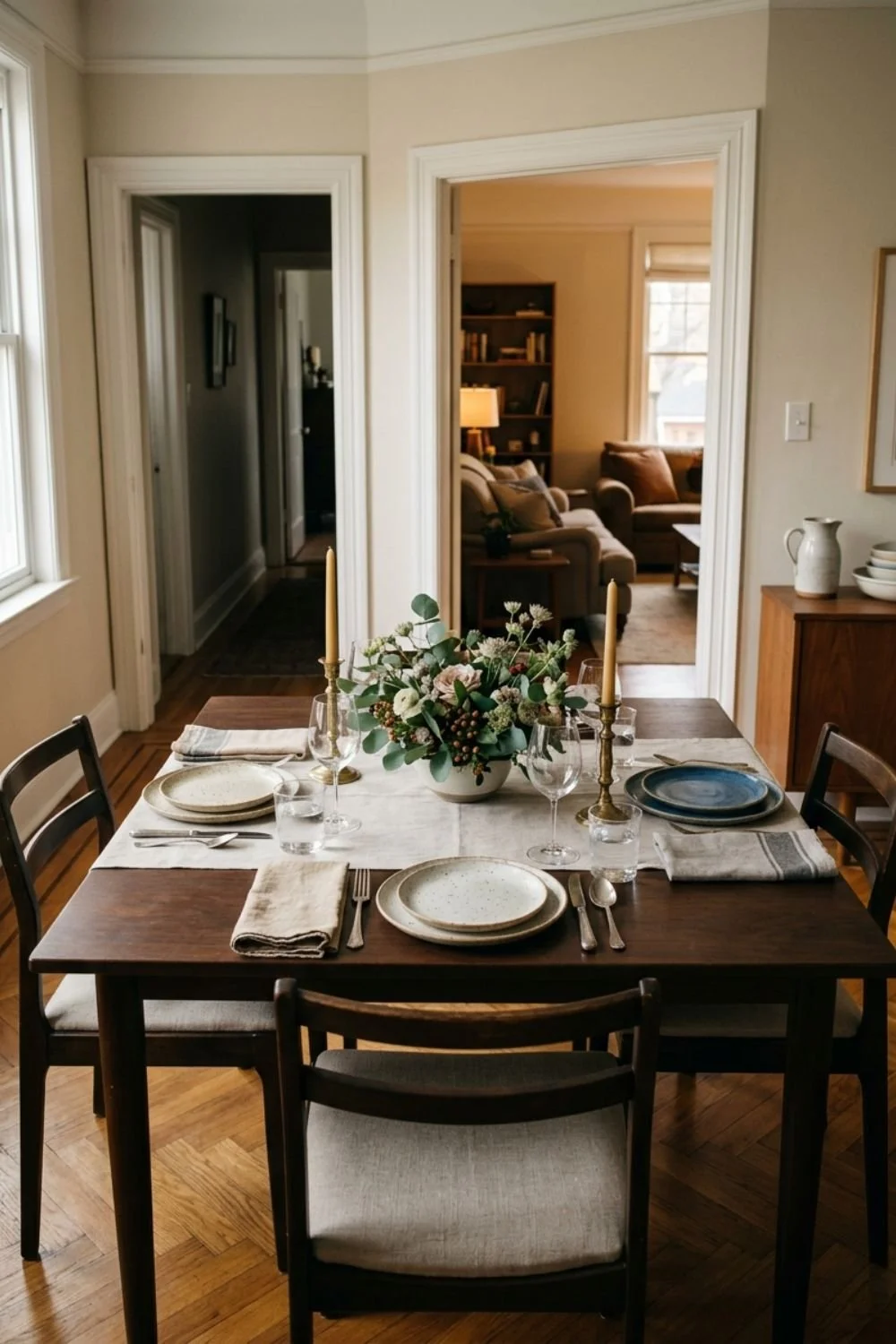
Once we sit for dinner, the table becomes the center. But I try not to make it feel like a formal commitment. I set it in a way that feels generous rather than precious. Cloth napkins, yes, but nothing so delicate that people worry about staining them. Good plates, but not ones that require careful handling.
The seating matters more than I initially understood. I don't do place cards unless it's a large group, but I do pay attention to who sits where. I try to position people so they can see each other easily, so conversation can move around the table rather than splitting into separate dialogues.
I also think about proximity. Some people need space. Others are comfortable with closeness. I watch for this as people settle and adjust accordingly. Small shifts in chair placement can make a real difference in how comfortable someone feels over the course of a meal.
Creating Reasons to Move
After dinner, I create a reason to leave the table. Coffee in another room. Dessert by the window. A walk to see something in the garden. This isn't just about clearing plates. It's about giving people permission to shift, to stretch, to reconfigure the group.
Sometimes this means the conversation splits naturally. Two people move to the couch to continue a discussion. Others linger at the table. Someone steps outside. I've learned not to try to keep everyone together at this point. The evening has its own momentum. Let it unfold.
The Discovery Element
I like to place something unexpected in a secondary space. A book on architecture left open on a side table. A collection of objects from travels. Nothing that demands attention, but things that reward curiosity.
These details give guests something to notice if they wander. They create small moments of discovery that don't rely on me to facilitate. Someone picks up a book, mentions it, and a conversation begins. These moments feel organic because they are.
Comfort Without Stagnation
The balance I'm looking for is this: people should feel comfortable enough to settle, but not so settled that the evening becomes static. Movement keeps energy alive. It prevents the heaviness that comes from sitting in one place too long.
I think of it as choreography, but gentle. Not directing people, just creating the conditions where movement feels natural. A space that invites, a layout that flows, moments built in where transition makes sense.
When the architecture of an evening works, guests don't think about where to go or what to do next. They simply move, and the space guides them.
Disclaimer: AI-assisted writing applied.