Knitting as Rest: How Making Something Saved Me From Doing Everything
I have never been good at doing nothing.
Even on weekends, even on holidays, there is a part of my brain that keeps a running tab of everything I should be doing instead. Taking a walk feels fine until I realize I forgot to respond to an email. Sitting on the couch feels like failure. I have read enough about burnout to understand this pattern, but understanding it and actually interrupting it are very different things.
The Problem With Regular Rest
In the year and a half leading up to when I picked up knitting, I was building this brand from scratch while quietly battling anxiety that had started to feel less like a background hum and more like a constant companion. I was tired in a way that sleep didn't fix. And the advice I kept getting, rest more, slow down, disconnect, was technically correct but practically useless. I couldn't rest. The moment I stopped, everything I hadn't dealt with came rushing in.
What I needed wasn't rest from work. I needed something that could occupy just enough of my attention that the noise got turned down.
What Knitting Actually Does
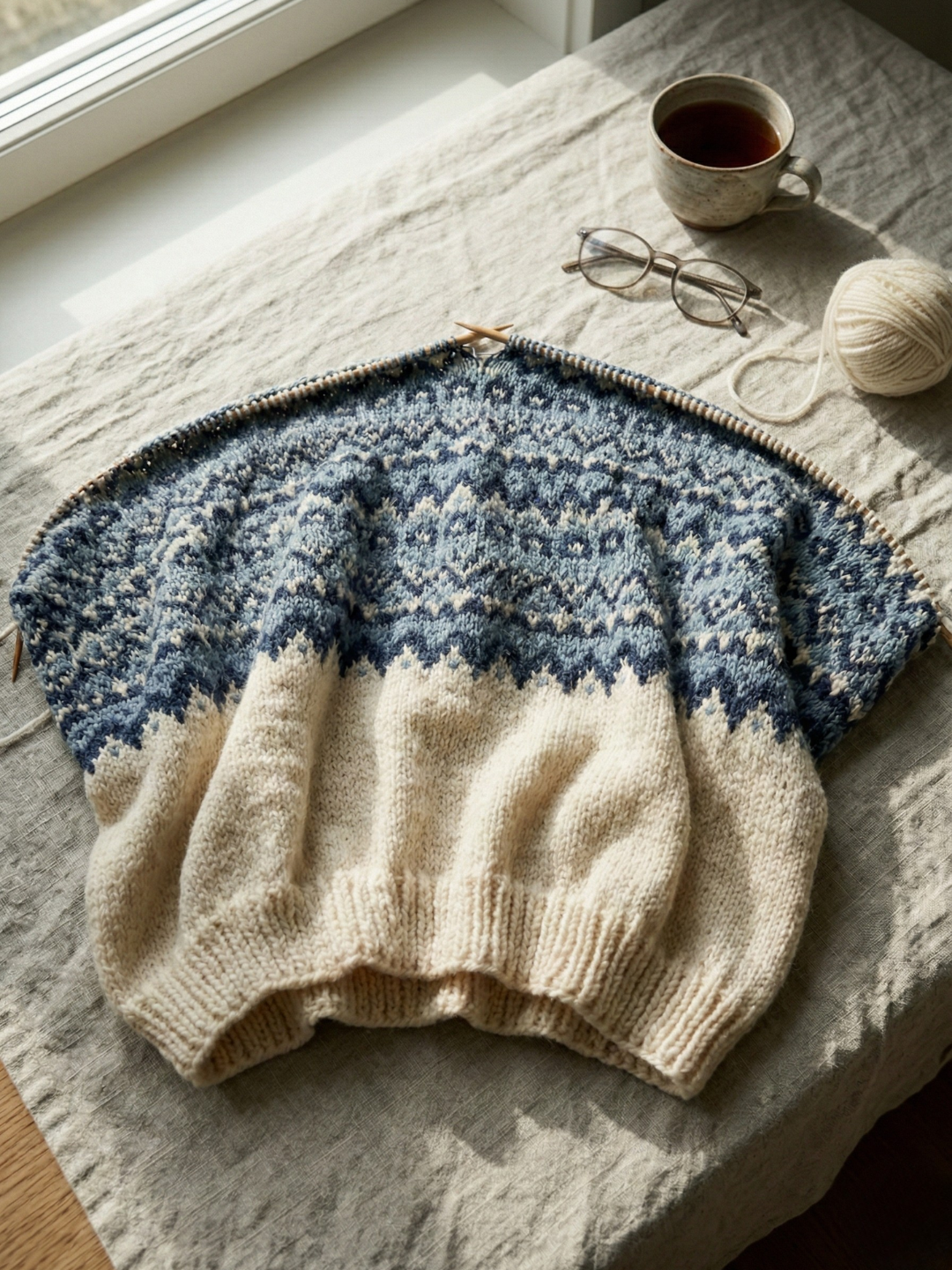
The first evening I sat down with my needles and that impossibly ambitious pattern, something shifted. It wasn't dramatic. But I noticed that I had spent an hour not thinking about my business. Not because I was distracted, but because I genuinely couldn't think about two things at once. Counting stitches, tracking a complicated pattern, keeping tension consistent: it asks just enough of your brain to crowd out everything else.
There's a rhythm to it, too. The repetitive motion of the needles, the same gesture hundreds of times over, is quietly regulating in a way I didn't anticipate. I'm not a neuroscientist and I'm not going to pretend I fully understand why, but I know that after an hour of knitting, I feel measurably calmer than when I started. It became the most reliable way I found to actually decompress.
The Permission to Stop
What I find most interesting, looking back, is that knitting gave me permission to rest in a way that pure rest never did. I was still doing something. I was making a sweater. That tiny piece of justification was apparently all my overactive conscience needed. Over time, though, something shifted. I stopped needing the permission. The act of sitting down with my knitting started to feel like enough on its own, without having to earn it.
That's a slow change, and I don't want to make it sound more profound than it was. But for someone who spent years treating stillness as a character flaw, it mattered.
A Different Relationship With Progress
Business progress is often invisible or delayed. You work for months and the results are unclear. Knitting is the opposite. Every session ends with something measurably different than when you started. An inch more of fabric. A completed sleeve. That tangible, slow accumulation turned out to be exactly what I needed as a counterweight to the more abstract, ambiguous work of building something from nothing.
I would never claim knitting fixed my anxiety or solved my burnout. What it did was give me a way back into my own body and a reason to stop for an hour without guilt. Sometimes that is exactly the thing you need most.