Why I Only Knit With Natural Fibers
(And Stopped Buying Synthetic Anything)
Before I started knitting, I thought about fabric in a fairly surface-level way. I noticed texture and weight. I had a general preference for natural materials. But I wasn't particularly systematic about it, and I definitely wasn't reading the fiber content label on every garment before it came home with me.
Knitting changed that completely.
What Thirty Hours Teaches You
When you spend a month knitting a sweater, you develop a relationship with the yarn that's hard to describe. You know how it behaves. You know how it feels on your hands after two hours. You know whether it splits easily or holds together, whether it has warmth and depth or a plasticky, flat quality that you only notice once you've handled something better.
The first time I tried knitting with an acrylic yarn, I understood within about twenty minutes that I didn't want to finish the project. It felt like working with a very fine plastic bag. The stitches were fine and the result would technically have been a sweater. But I would not have wanted to wear it, and I could not justify spending weeks of my time and attention on it.
The Anti-Synthetic Position
I don't wear polyester if I can help it. I avoid blends where synthetic fiber makes up a significant portion of the fabric. This is not a new preference, but knitting sharpened it into something I can actually articulate. The experience of handling natural fiber, real wool, alpaca, linen, cotton, and feeling the difference in quality and warmth and texture made it impossible to go back to treating synthetic material as a neutral choice.
Polyester doesn't breathe. It holds body odor in a way that natural fibers don't. It pills faster. It ages worse. And it's derived from petroleum, which means it sheds microplastics every time it goes through a wash. I'm not militant about it, but once you know, you notice.
Knitting as Slow Fashion in Practice
The other thing that shifted was how I think about buying clothes at all. Making something by hand recalibrates your sense of what a garment is worth. A handknit sweater takes anywhere from twenty to sixty hours depending on the pattern and yarn weight. When you have put that much time into something, you become very selective about what earns a place in your wardrobe.
I own fewer things now. Not because I set out to minimize, but because my standard for what I bring in got higher. I would rather have three sweaters I genuinely love than twelve that I feel indifferent about. Knitting has been a very direct, practical route to that wardrobe philosophy. It's not abstract. It's the difference between owning something mass-produced in a fiber I don't particularly like, and owning something I made myself in a yarn I chose specifically because it was beautiful and would last.
The Fibers Worth Knowing
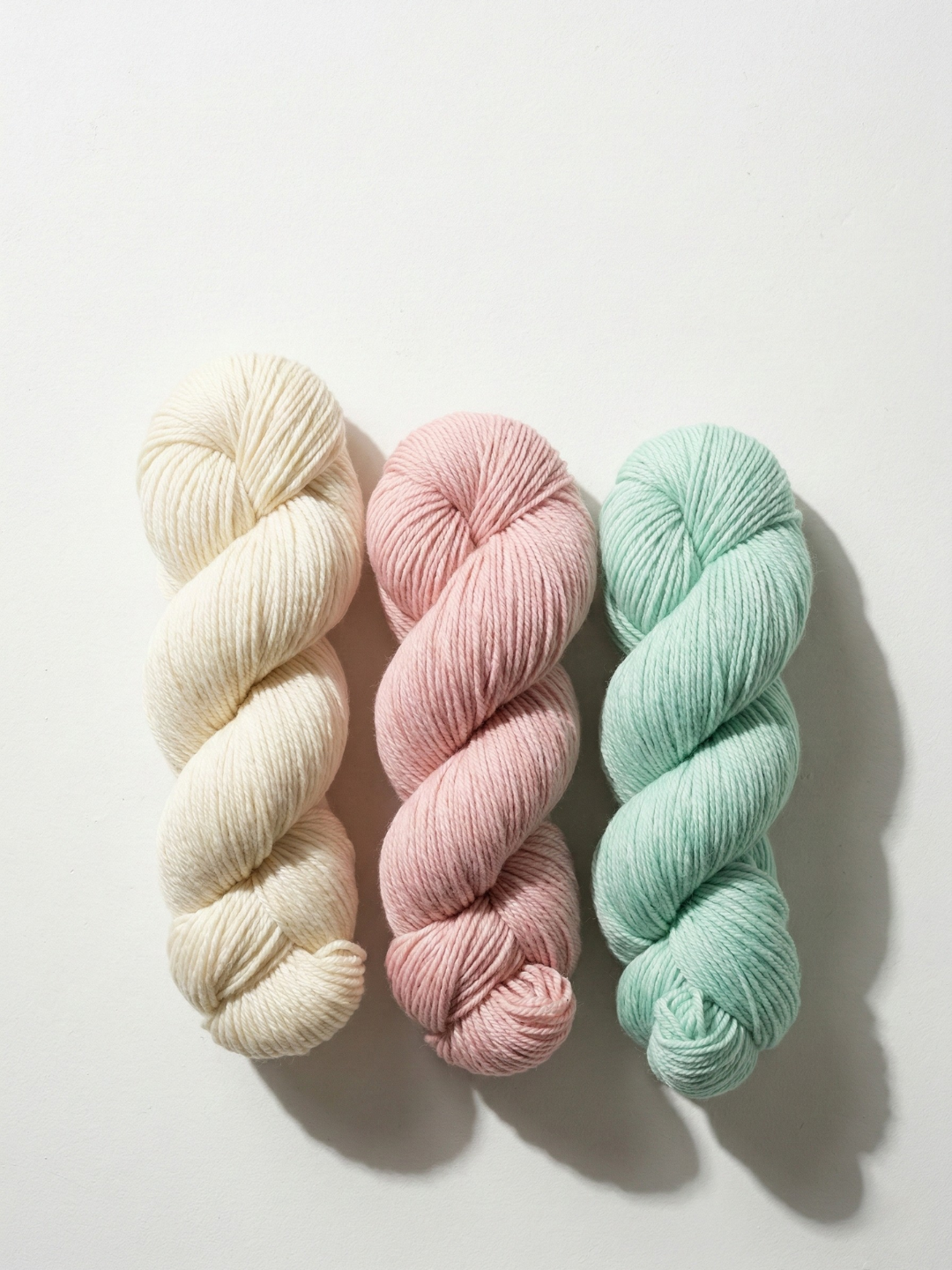
My current preferences: a good merino for next-to-skin projects because the softness is reliable and the range of quality yarn available is wide. Alpaca for pieces where I want warmth without weight. Linen and cotton for summer projects, especially since I live somewhere warm enough to actually wear them. I've also started experimenting with mohair blends, which add a halo and texture that looks beautifully.
None of these are cheap. But when the alternative is spending the same money on something that will pill after ten washes and end up in a landfill within three years, the calculation shifts. Good yarn, like good fabric, is not an indulgence. It's just a longer view.