The Essentials of Spatial Composition and Light
I spent years refining my eye for color and texture. But there was a moment when I realized that good objects in the wrong arrangement still don't work. A beautiful sofa placed three inches too far from the wall. A perfect lamp in the wrong corner. The room felt close, but not resolved.
Spatial composition is the final layer. It's where carefully selected pieces either come together or fall apart.
Flow and Movement
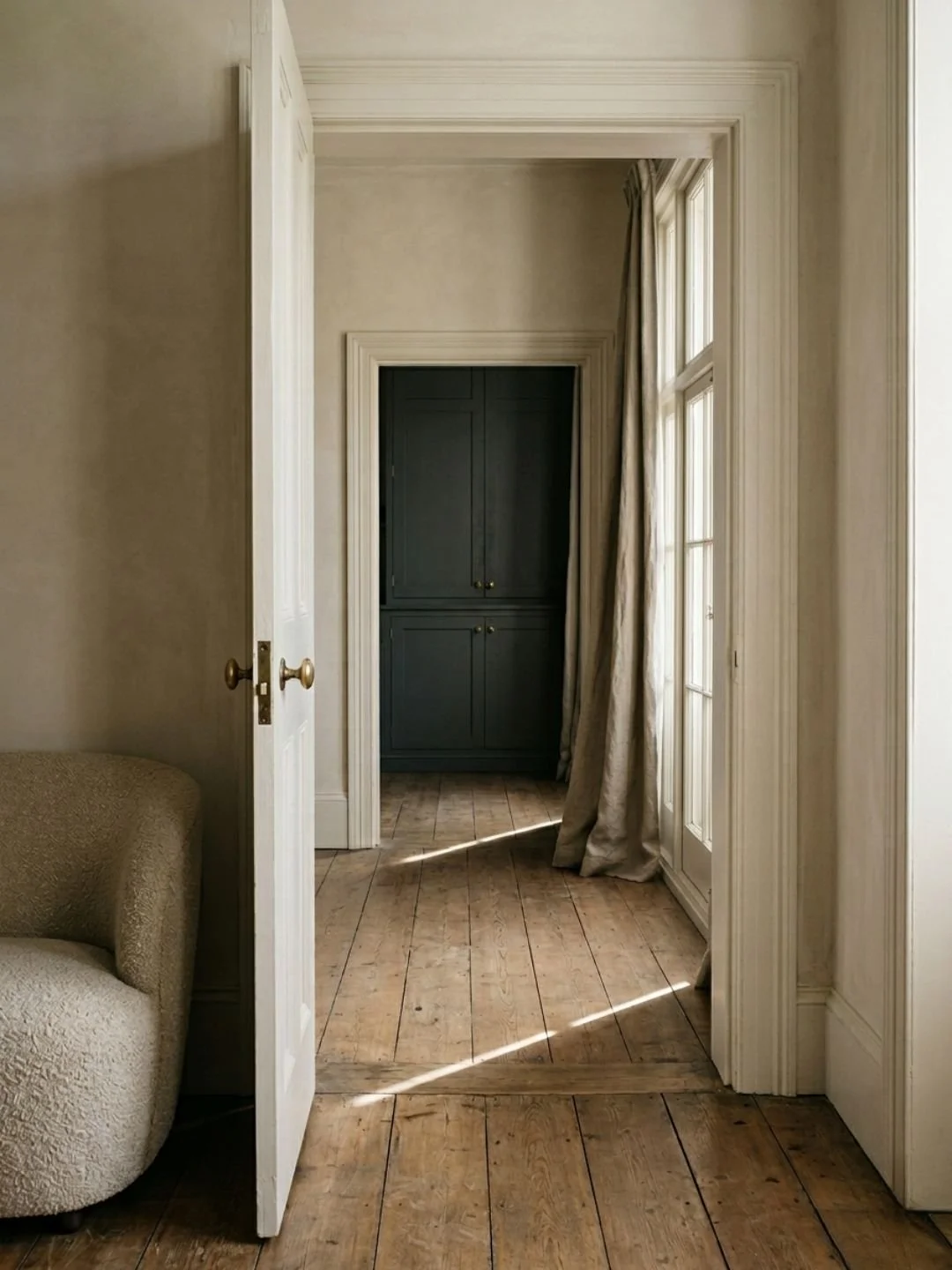
Rooms have natural pathways. The route from the door to the seating area. The line between the kitchen and the dining table. I map these before I place furniture.
A room with good flow doesn't make you think about navigation. You move through it easily, without angling your body past a chair or detouring around a coffee table. The space guides you.
I test this by walking my typical patterns for a few days. Where do I naturally want to set down my keys? What route do guests take when they enter? If I'm constantly adjusting my path to avoid furniture, something needs to move.
The goal is to leave these pathways clear and intuitive. Furniture defines the space without blocking it. Read more on Designing for Flow and Movement.
The Geometry of Connection
Seating arrangements have geometry. Two sofas facing each other across a wide coffee table create formality. An L-shaped configuration with chairs at angles feels conversational.
I prefer arrangements that allow people to see each other without direct opposition. Perpendicular seating, subtle angles, a loose grouping around a low table. This geometry invites interaction without forcing it.
Distance matters. Seats placed too far apart fragment a group. Too close feels intrusive. I aim for a distance that allows easy conversation without raised voices.
The best arrangements create a natural focal point. Not a television or fireplace necessarily, but a center that people orient toward without thinking about it. Read more on Social Seating in Home Styling.
Light as Material
Good lighting creates contrast. A room lit evenly from overhead feels flat. The same room with layered light at different heights develops dimension.
I layer three types: ambient light for general illumination, task lighting for specific activities, and accent lighting to highlight particular objects or surfaces. The room becomes modulated rather than uniform.
Shadow is part of the composition. A darker corner makes a room feel larger. A wall washed with warm light draws the eye. I use light to create zones within a single space—a reading area with focused light feels distinct from the softer glow of the main seating.
Time of day changes everything. I pay attention to how natural light moves through the room and place lamps where they'll matter most once daylight fades. Read more on Using Light to Define Atmosphere.
The Anchor Piece
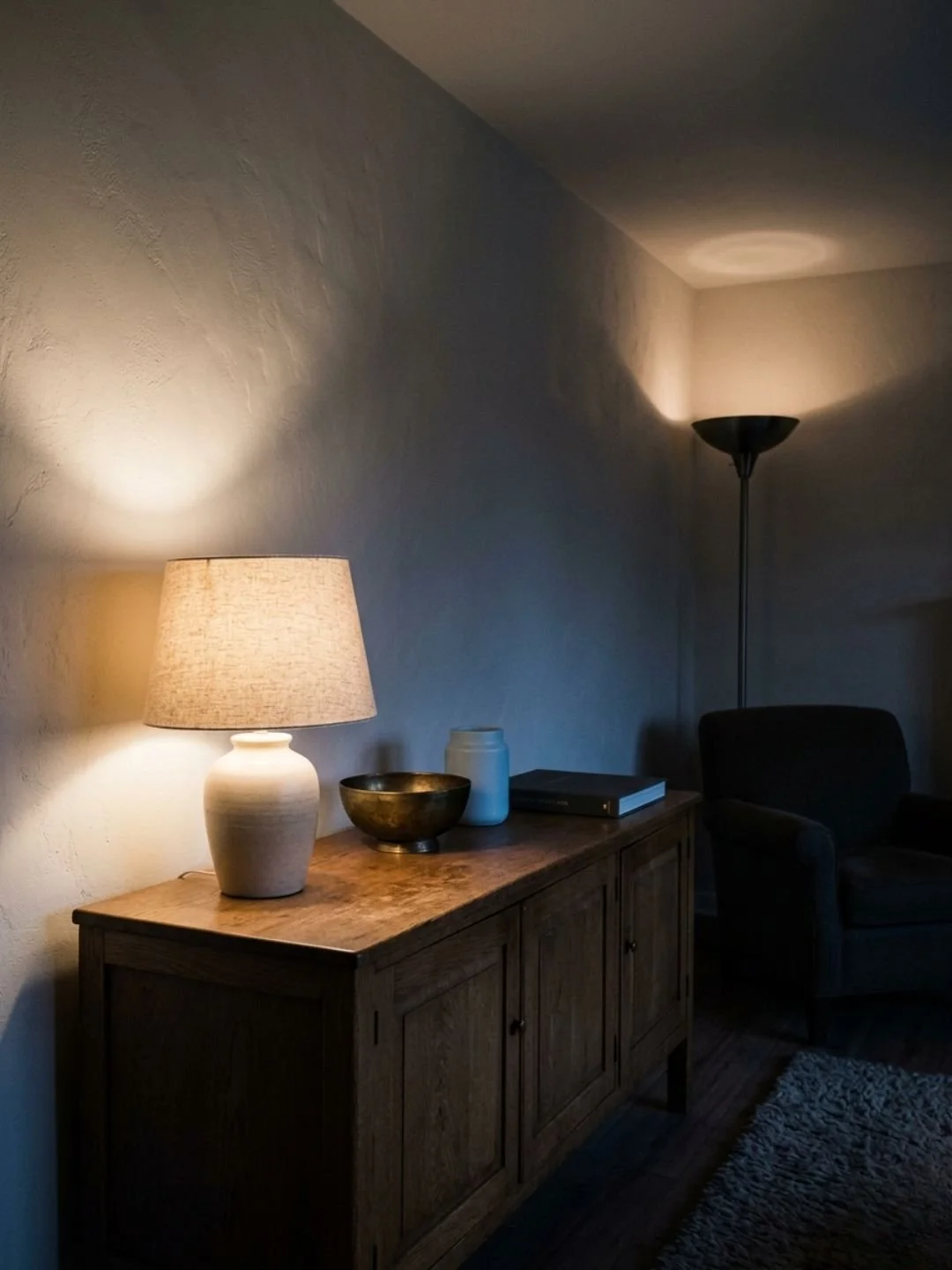
Every room benefits from one piece with real presence. Not necessarily large, but distinctive. In my living room, it's a vintage oak credenza. In the bedroom, a carved wood bench.
The anchor sets the tone. It has the most visual weight, the strongest personality. Because it exists, everything else can be quieter.
I see rooms where every piece tries to be special. The result is visual noise. The anchor gives you permission to edit down. A simple sofa. Minimal side tables. One strong piece doing the work.
This makes composition easier. You're not searching for six interesting objects. You're building a context that allows one interesting object to register fully. Read more on Selecting the Primary Anchor Piece.
Balance Without Symmetry
Perfect symmetry can feel staged. But complete randomness feels chaotic. I look for visual equilibrium instead.
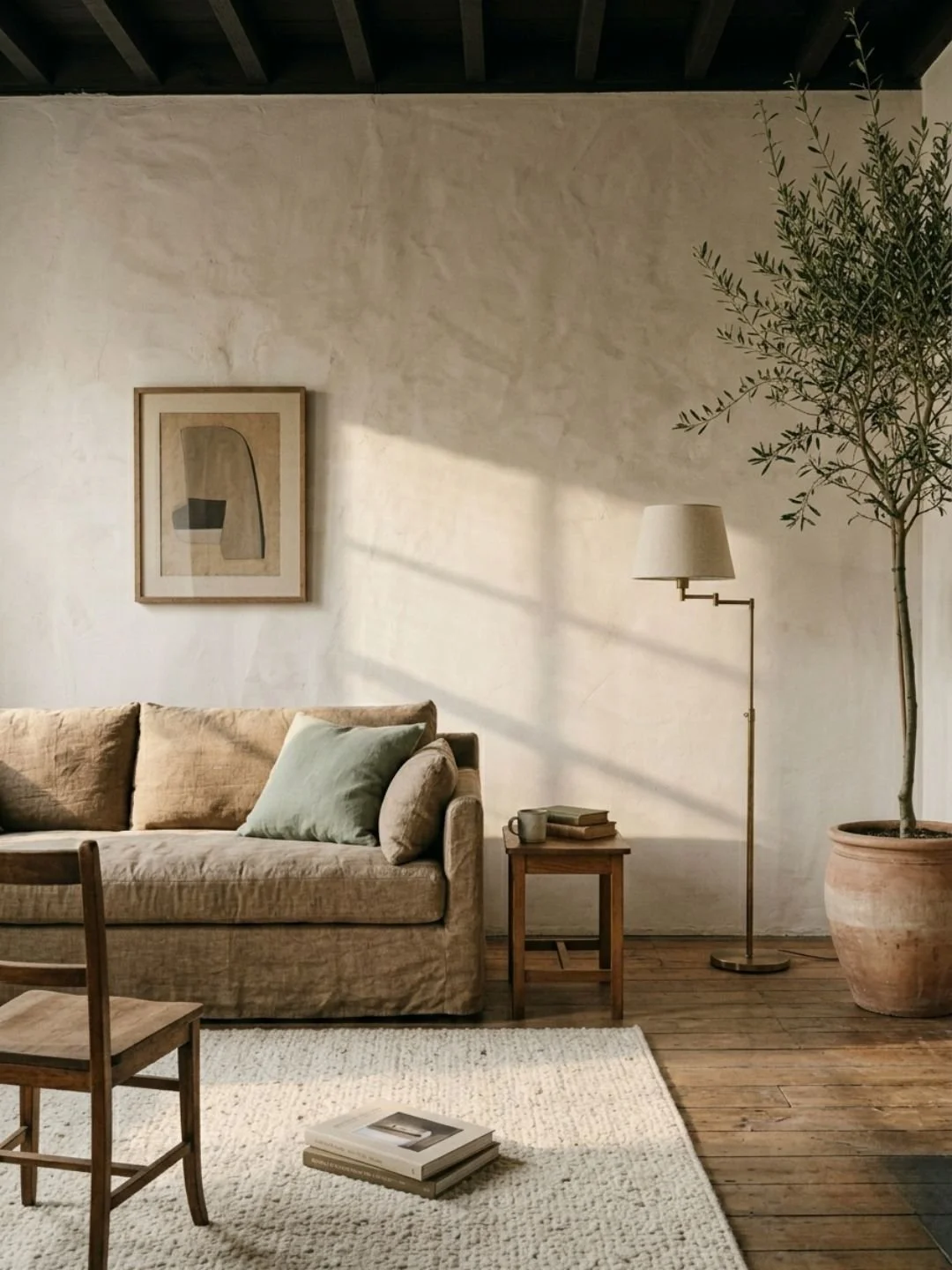
I think in terms of weight distribution. A large sofa on one wall balanced by a bookshelf and two chairs on the other. A tall lamp in one corner answered by a substantial plant across the room.
This takes adjustment. I'll move something and observe it for a few days. If my eye keeps getting pulled to one side, that area is either too dense or too empty.
The test is whether the room feels grounded. Not formal, not matchy, but stable. Your gaze should move easily around the space without snagging on one dominant area. Read more on Mastering Balance in a Room Layout.
What Shifts
Once you see space as something you compose rather than fill, rooms start to feel different. They become environments shaped by intention. Not just collections of furniture, but places where light, geometry, and flow work together.
This is where selection and arrangement converge. Where a room stops being designed and starts being resolved.