Sourcing for Longevity in Interior Design
I'm not a materials expert. I can't tell you the difference between quarter-sawn and rift-sawn oak or explain the technical specifications of fabric weaves. But I've developed a filter for quality that works without needing that level of expertise.
It's a mental checklist I run through before I buy anything substantial for my home. The questions are simple, but they've saved me from a lot of purchases I would have regretted.
The Pre-Purchase Filter
What It's Made Of
I check the label first. If it says "100% linen" or "solid wood" or "full-grain leather," I keep looking. If it says "linen-blend" or "wood veneer" or just "leather," I need to know more.
Vague descriptions are red flags. "Wood-look finish" means it's not wood. "Linen-style" means it's polyester. "Genuine leather" often means bonded leather, which is scraps glued together and will peel within a few years.
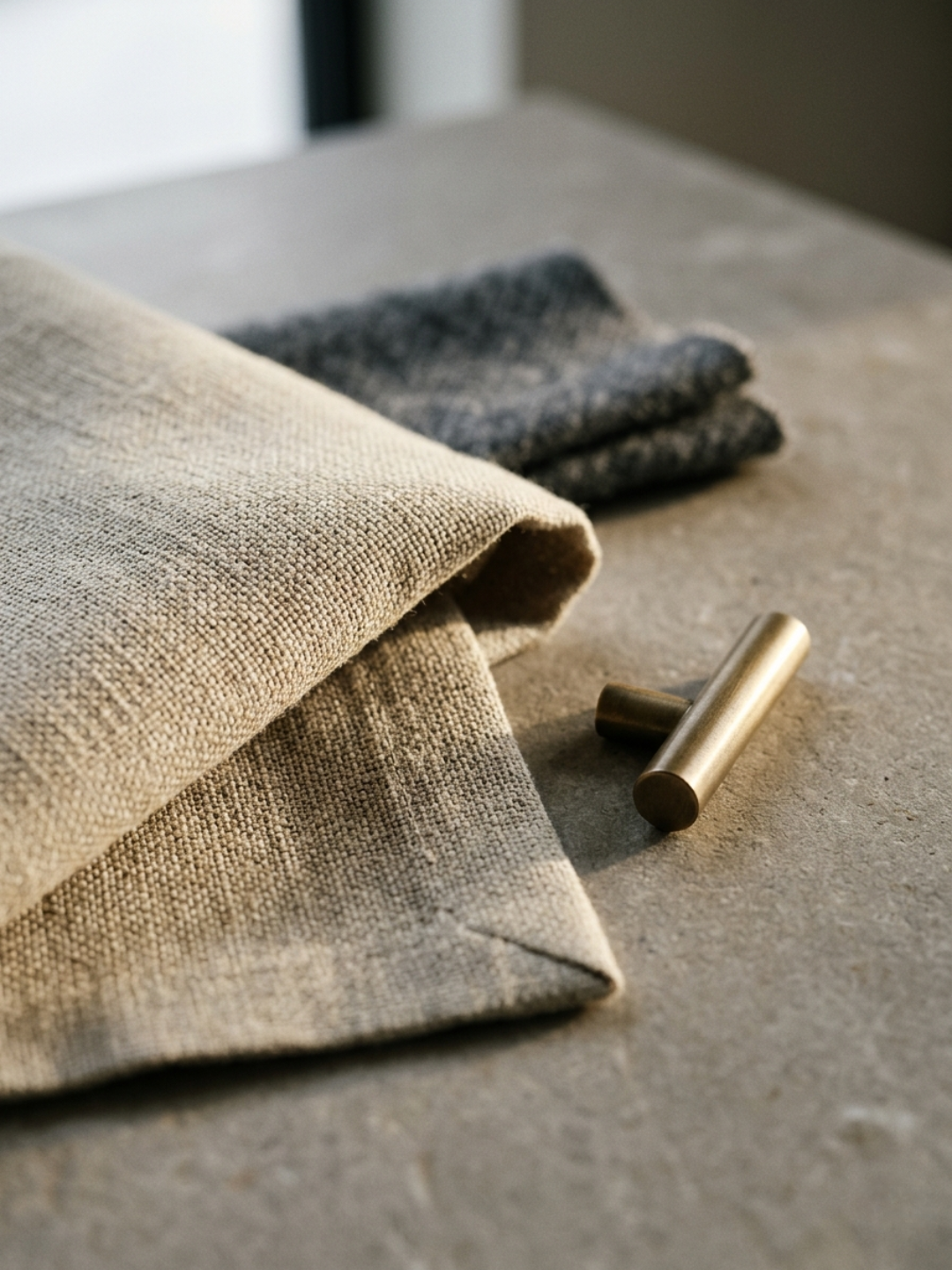
Solid wood furniture is heavier than veneer over particle board. You can tell by lifting it or checking the edges. Real linen has texture and weight. Synthetic blends feel slippery and thin in comparison.
If the product description is full of marketing language but doesn't tell you what it's actually made of, I skip it.
How It's Made
Construction matters as much as materials. I look for dovetail joints on drawers, not staples or glue. I check if cushions are removable (higher quality, easier to clean). I ask if something can be reupholstered or refinished down the line.
When I'm shopping in person, I open drawers, flip furniture over, look at the underside. You can see how something is assembled. If it wobbles or feels flimsy in the showroom, it's not going to hold up at home.
If I'm buying online, I research the brand. I look for specifics about construction in the product details. If they're not listing it, that's usually because there's nothing worth listing.
How It Will Age
I think about what something will look like in five years. Will it develop patina or just look worn out? Can it be repaired if something breaks? Is it made of materials that improve with use?
A solid wood table can be sanded and refinished. Particle board furniture goes in the trash when it's damaged. Full-grain leather softens. Bonded leather cracks. Linen gets softer. Polyester pills.
I also think about cost per use. A linen duvet cover that costs $300 but lasts ten years is cheaper than a $60 one I replace every year because it's thinning out.
Red Flags I've Learned to Spot
Pricing that seems too good is usually too good. Real linen bedding won't cost $50. Solid wood furniture won't cost $200. If the price is significantly lower than everywhere else, there's a reason.
Particle board furniture trying to look expensive. You can tell by the weight and the edges. The veneer peels, the boards swell if they get wet, the whole thing feels cheap when you interact with it.
Bonded leather labeled as just "leather." It looks fine for about six months, then it starts cracking and peeling. Full-grain leather costs more but actually lasts.
Anything described with "-style" or "-look" is an imitation. Linen-look is polyester. Marble-look is laminate. They're telling you it's fake right in the description.
No information about where or how something is made. If a brand can't or won't tell you about their manufacturing, I don't trust it.
When to Invest vs. When to Wait
I have a loose hierarchy of what matters most. Bedding and seating come first because I use them daily. I'll save for good linen sheets and a quality sofa before I worry about decorative objects.
Kitchen textiles matter because I'm in there constantly. I'd rather have three good linen dish towels than fifteen cheap cotton ones.
For things I'm less certain about, I wait. If I'm not sure exactly what I want or how something will fit into my home, I don't buy it just because it's on sale. I've made that mistake before. The discount doesn't matter if the piece doesn't work.
Sometimes the right answer is "not yet." I'd rather live with a gap in my home than fill it with something mediocre just to have it furnished. I'm building slowly, and that's fine.
This filter has become automatic now. I buy less, but what I do buy is better. I'm not trying to furnish my entire home at once. I'm building a collection of things that will last and that I'll actually want to keep.