The Role of Patina in Home Décor
Patina isn't the same as looking shabby. It's what happens when a material develops character through use. A wooden cutting board that shows knife marks. Brass hardware that's darkened in spots. Leather that's softened and creased where you sit. These are signs that something is being used, not ruined.
I used to try to protect everything. Coasters under every glass, immediately wiping up water spots on the counter, stressing about scratches on the dining table. At some point I realized I was living around my home instead of in it.
Materials That Get Better
Unlacquered Brass
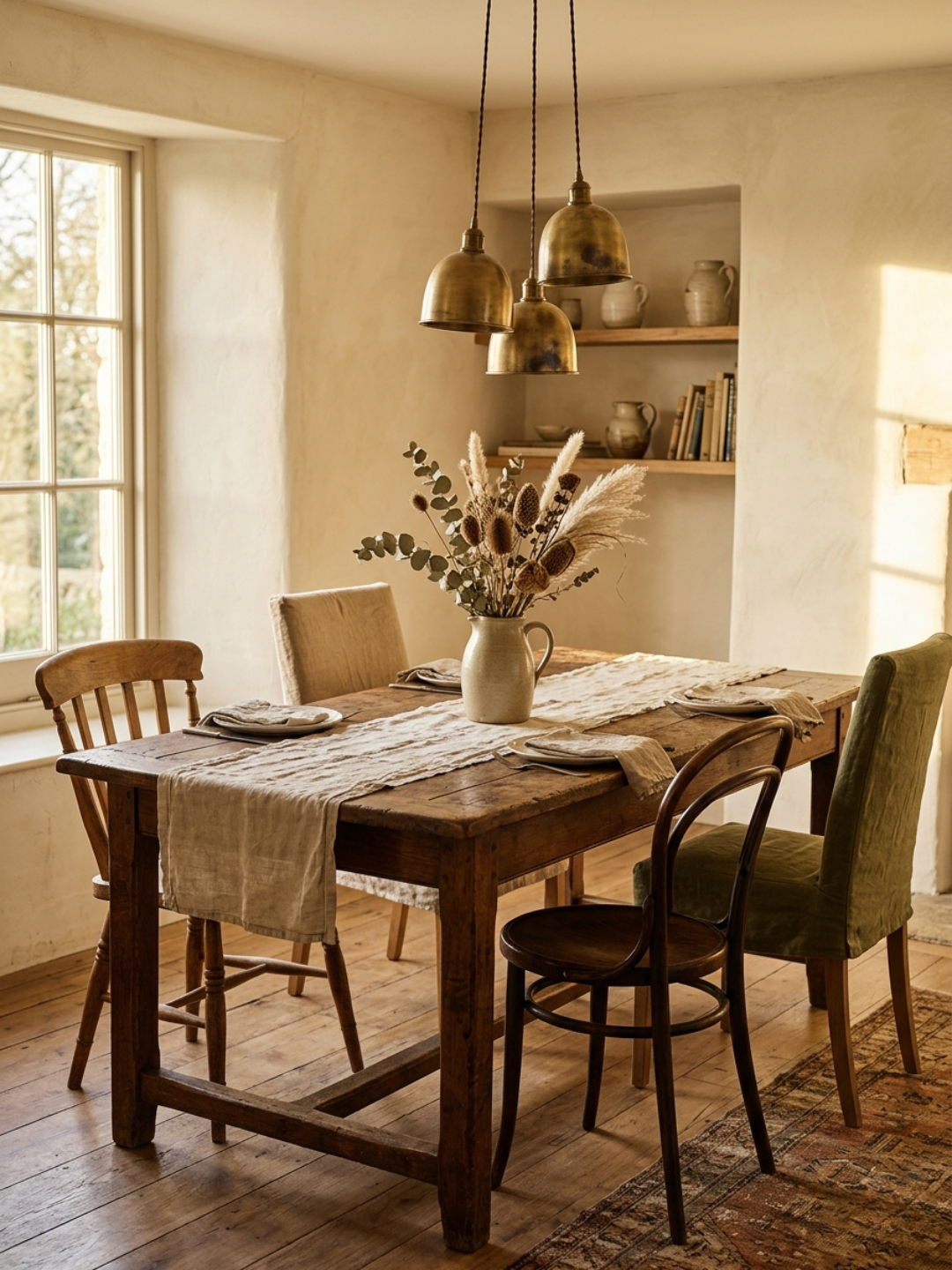
Unlacquered brass changes as you touch it. It darkens, develops spots, shows where your hands make contact with door handles and cabinet pulls. Some people hate this. I prefer it to the uniform shine of lacquered brass or chrome.
Lacquered brass stays perfect until the finish chips, and then it looks damaged. Unlacquered brass just evolves. The variation in tone adds depth. It looks lived-in without looking neglected.
You can polish it back if you want, but I don't. I like the contrast between the darker areas and the places that still catch light.
Wood
A wooden cutting board that shows use is more appealing than a pristine one. The knife marks and slight discoloration are proof it's functional. Same with wooden tables and counters. The small scratches and dings that accumulate make the piece feel less precious.
This only works if the wood is good quality to begin with. Cheap wood doesn't patina, it just looks damaged. Solid hardwood develops character. Veneer over particle board just deteriorates.
I oil my wooden surfaces occasionally to keep them from drying out, but I'm not trying to keep them perfect. They're meant to be used.
Leather
Leather softens where you sit. It creases, it darkens slightly in high-contact areas, the texture changes. A leather sofa that's five years old and used daily looks better than a new one.
The key is quality. Good leather ages. Bonded leather or cheap splits just crack and peel. If you're going to choose leather, buy something that will actually develop patina instead of falling apart.
Natural Stone
Marble stains. Limestone etches. This is just what these materials do. You can seal them, and I do for counters, but they're still going to show use over time.
I've stopped fighting it. A water ring on the marble counter isn't a disaster. It's evidence that someone set down a glass. If I wanted a surface that stays perfect, I'd have chosen quartz.
Patina vs. Looking Worn Out
The difference between patina and damage comes down to quality and care. Good materials age gracefully. Cheap materials just break down.
A solid wood table develops character. A laminate table chips and peels. Unlacquered brass darkens beautifully. Cheap plated hardware corrodes and flakes. Full-grain leather softens. Bonded leather cracks.
I'm not precious about my furniture, but I do maintain it. I oil wood, I condition leather, I wipe down brass when it needs it. That's different from trying to keep everything looking new.
What I Don't Let Patina
I'm realistic about this. Some things need protection. I use cutting boards on my counters, not just for the counter but because I don't want my knives getting dull on stone. I have a rug pad under my wool rug so it doesn't wear through on the hardwood.
There's a difference between letting materials age naturally and being careless. I'm not leaving wet glasses directly on wood furniture. I'm just not panicking if something happens.
The Mental Shift
At some point I stopped trying to preserve everything and started letting my home be used. That meant accepting that materials change. A wooden table will get scratched. Brass will tarnish. Linen will wrinkle and soften.
New and perfect feels flat to me now. A room full of pristine, untouched surfaces looks staged. I'd rather have furniture that shows it's been sat on, floors that have been walked on, counters that have been cooked on.
This doesn't mean I want a home that looks beat up. It means I want materials that improve with age instead of just deteriorating. That requires choosing quality from the start.
Living with materials instead of preserving them has made my home feel more comfortable. I'm building for longevity, not perfection. The things I bring in are meant to be used, and they look better because of it.