Balancing Hard and Soft Textures in Interior Design
Most homes are dominated by hard surfaces by default. Countertops, floors, tables, shelving. These are structural necessities, but if that's all you have, the space feels cold. I've seen rooms with beautiful warm paint colors that still feel sterile because there's nothing soft to balance out the stone and metal and wood.
The solution isn't complicated. You need textiles. Not as decoration, but as a counterweight to all those hard surfaces.
The Hard Surface Foundation
My kitchen has marble counters, brass hardware, and wood cabinets. These materials anchor the space. They're durable, they're functional, and they set the aesthetic tone. I like how they look together.
But when the room was just those materials, it felt more like a showroom than a place where I actually cook. Everything was smooth and polished. There was nothing for your eye or hand to rest on. The acoustics were sharp. It needed something to soften it.
This is the issue with hard surfaces. They're necessary, but they're not enough on their own. Stone and metal and wood create structure. Textiles create warmth.
Adding Softness Strategically
I keep linen dish towels on a brass hook by the stove. There's a wool runner in front of the sink. A wooden bowl sits on the marble counter with whatever fruit I have that week. These aren't big gestures, but they shift how the kitchen feels.
In my bedroom, linen curtains do most of the work. They're heavy enough to puddle slightly on the floor, and the fabric has texture that catches afternoon light. The bed has linen sheets and a chunky knit throw folded at the end. That's it. I don't need a lot of soft elements, just enough to create contrast against the wood bed frame and the plaster walls.
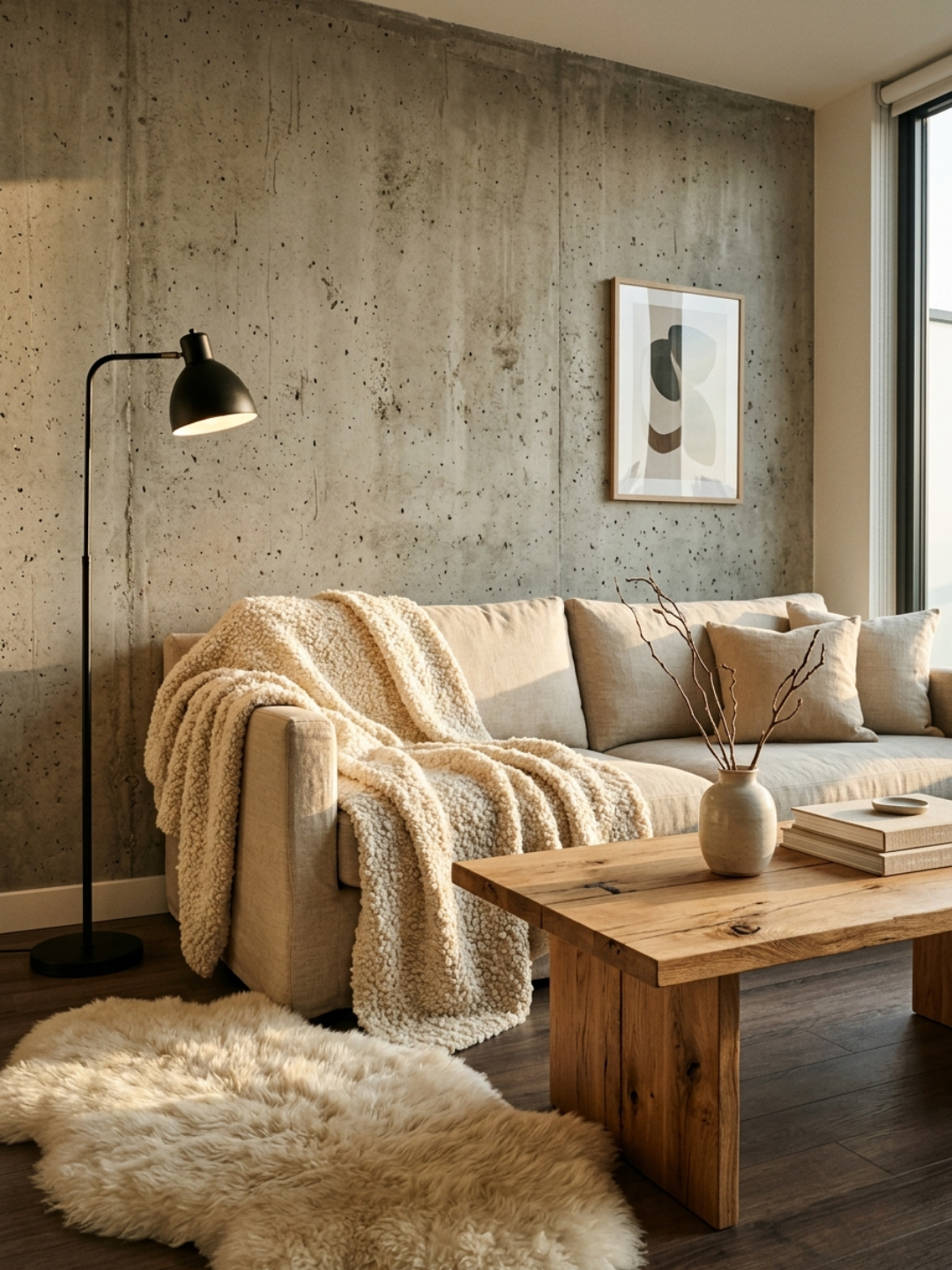
Same principle in the living room. Leather sofa, wooden coffee table, but nubby linen cushions and a wool rug underfoot. The ratio isn't scientific. I'm just making sure the room doesn't tip too far in one direction.
Where Softness Matters Most
I pay more attention to softness in spaces where I spend time. The kitchen, the bedroom, anywhere I'm sitting or lingering. These rooms need to feel comfortable, not just look good.
High-touch areas benefit from textiles too. A wool rug by the front door. Linen napkins on the dining table. Places where your hands or feet actually make contact with materials throughout the day.
If a room has an echo or feels too sharp acoustically, that's usually a sign it needs more fabric. Hard surfaces bounce sound. Textiles absorb it.
The Visual Weight Balance
A thick linen throw draped over a smooth leather chair makes both materials more interesting. The leather looks more refined next to something with texture. The linen feels more substantial against something sleek.
I've noticed this with my marble counter and the wooden cutting board I keep on it. The marble is cool and polished. The wood is warm and scarred from use. The contrast makes you notice both. If everything on the counter were marble or everything were wood, it would read as flat.
Weight matters too. Heavy curtains ground a room in a way that lightweight cotton can't. A chunky ceramic bowl has more presence than a delicate porcelain one. I mix weights deliberately now. Something substantial next to something refined.
What Works in Different Rooms
In the kitchen, I focus on functional textiles. Dish towels, a runner, maybe a linen tablecloth if I'm setting the table. These are things I use, not things I'm adding purely for softness.
The bedroom gets more fabric because that's where comfort actually matters. Good bedding, real curtains, maybe a throw. I want the room to feel cocooning.
Living spaces get a lighter touch. A few cushions, a wool rug, a throw on the sofa. Enough to create contrast without making the room feel cluttered.
I notice now when a room tips too far toward hard or soft. If everything feels cold and sharp, I bring in textiles. If there's too much fabric and no structure, I edit back. It's about creating places for your eye to rest without overwhelming the space. You adjust as you go.