Natural vs. Synthetic Fibers in Home Textiles
I check labels now. Every time. It's become automatic when I'm shopping for anything textile. I pick up a throw blanket, flip over the tag, and if it says 100% polyester, I put it back. This wasn't always the case. I used to buy based on color and price and whether something looked good in the store.
Then I started knitting, and fiber became impossible to ignore. When you're working with yarn for hours, you notice everything. How merino wool feels completely different from acrylic. How cotton has weight while synthetic blends feel like nothing in your hands. That attention carried over to how I furnish my home. Now I can't unsee the difference between natural and synthetic fibers.
The Natural Fiber Basics
Linen
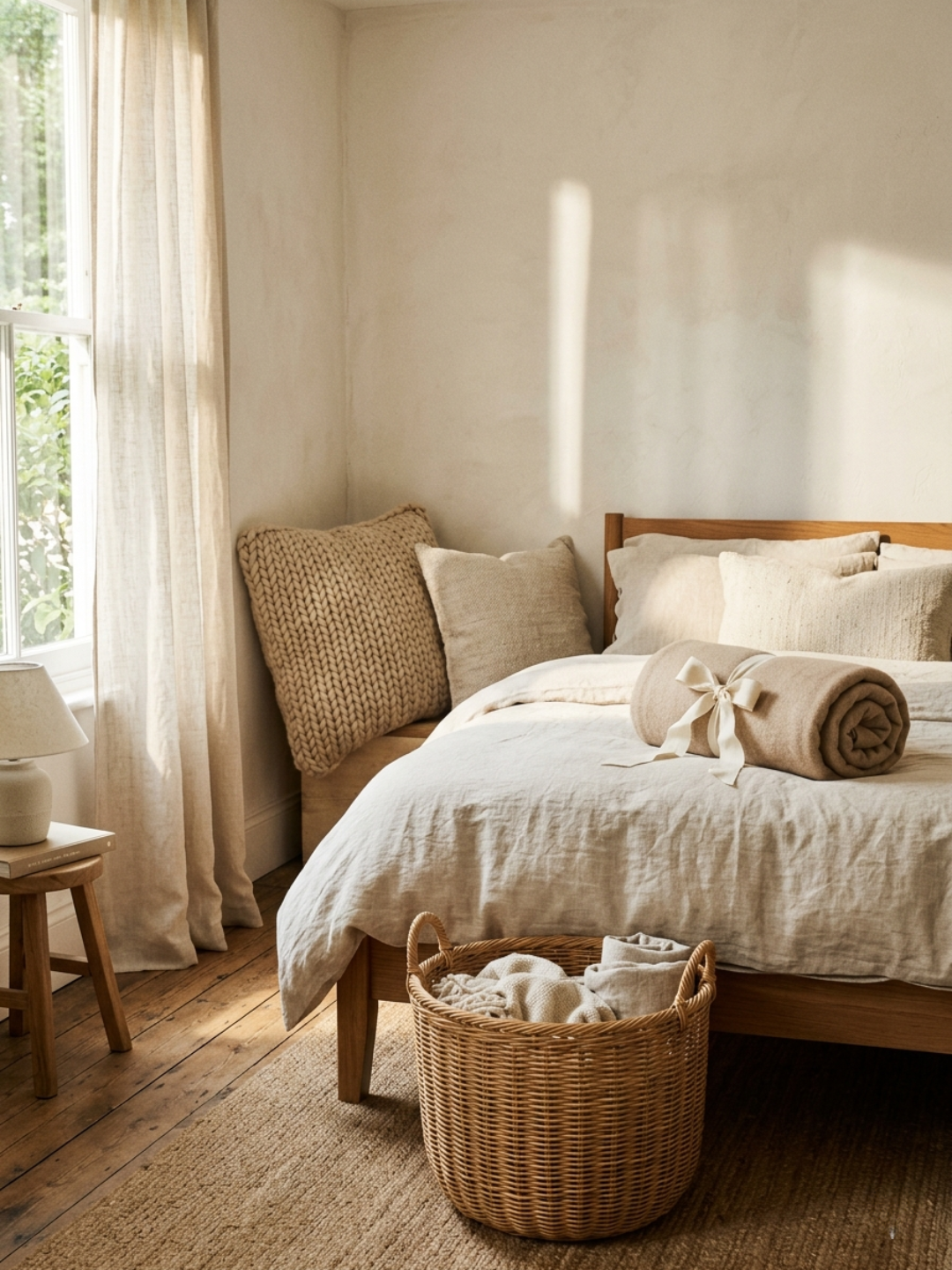
My bedding is linen. My curtains are linen. I have linen dish towels and linen napkins. It's the fiber I default to for almost everything textile in my home.
Linen regulates temperature better than anything else I've tried. It's cool in summer, insulating in winter. It gets softer with every wash instead of pilling or thinning out. Yes, it wrinkles. That's the trade-off. I stopped fighting it and now I just accept that my bed looks lived-in rather than styled.
For curtains, linen has the right weight. It hangs well, filters light without blocking it completely, and has texture that catches the eye. I've tried cotton curtains before and they felt too thin, too insubstantial. Linen has presence.
Wool
Wool rugs are worth the investment. They're durable, they age well, and they have a depth that synthetic rugs don't. I have a wool rug in my living room that's held up to daily foot traffic and still looks good years later.
Wool also doesn't trap dust and allergens the way synthetic fibers do. It naturally repels dirt and moisture. The main consideration is care. You can't just throw wool in the washing machine. But for high-use areas where you want something that lasts, it's the better choice.
Silk
I have silk pillowcases. That's where silk makes sense for me. It's gentle on hair and skin, and pillowcases don't need to be indestructible. I wouldn't choose silk for curtains or upholstery because it fades and wears too easily in high-use situations. Silk is beautiful but delicate. Use it where that trade-off makes sense.
When Synthetics Actually Work
I'm not rigid about this. I have outdoor cushions made from performance fabric because they need to withstand rain and sun. I have a synthetic runner in my entryway because it's machine-washable and I don't stress about wet shoes and mud.
The key is intention. I chose those materials for specific reasons. They solve problems that natural fibers can't. But I'm not buying synthetic bedding or curtains just because they're cheaper or easier to care for. In the main living spaces where materials set the tone, I still go natural.
If I can't explain why I'm choosing a synthetic over a natural fiber, I reconsider the purchase.
What to Look For When You're Shopping
Check the fiber content label. If it says "100% linen" or "100% wool," you're good. If it says "linen blend," find out what the blend is. Sometimes it's 10% linen and 90% polyester, which defeats the purpose.
Weight matters. Pick up the fabric. Does it have heft, or does it feel flimsy? Cheap linen feels papery. Good linen has body to it.
Price is usually an indicator. Real linen bedding won't cost $40. Real wool rugs won't cost $100. If the price seems too good, check the label twice.
Red flags: vague descriptions like "linen-look" or "wool-style." That means synthetic. Also avoid anything that feels slippery or too smooth. Natural fibers have texture.
I build my home around a baseline of natural fibers now. It costs more upfront, but these are the pieces that last and actually improve how a space feels to live in. Synthetics have their place, but only when I can justify the choice.