The Geometry of Social Seating in Home Styling
I used to think seating arrangements were about capacity. Enough seats for the people who might gather. A sofa, some chairs, maybe a bench. As long as everyone could sit, the room worked. Then I noticed something. We'd have friends over and the conversation would feel scattered. People on opposite ends of the sofa couldn't hear each other. Someone in a chair perpendicular to the group was visibly struggling to stay engaged. We had seating, but we didn't have connection. The arrangement was working against us.
Distance and Angle
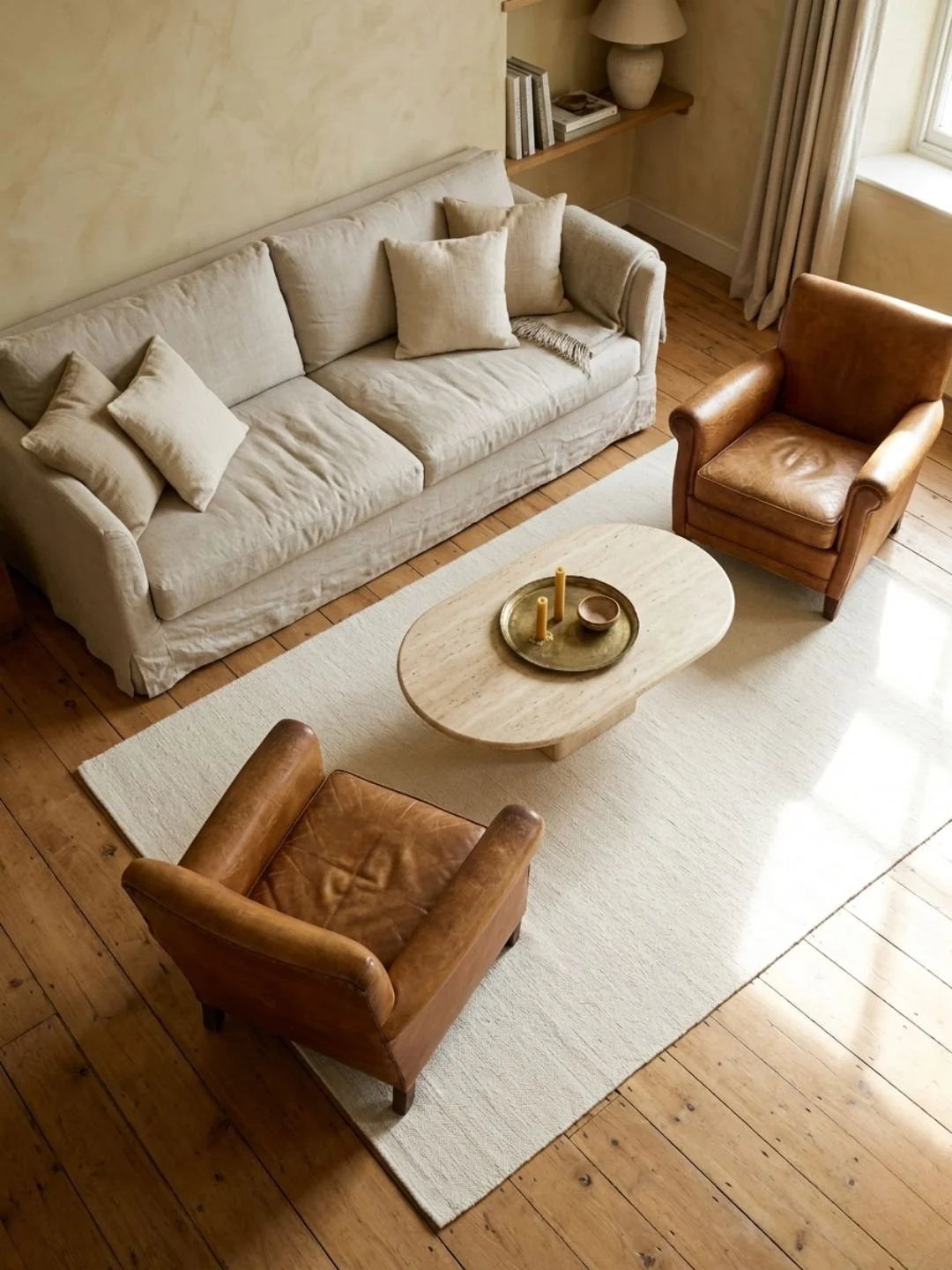
Two factors determine whether seating encourages conversation: how far apart people sit and what angle they face. Seats placed more than eight feet apart fragment a group. You can still talk, but it requires projecting your voice. Conversations split into smaller clusters because it's easier to talk to the person next to you than someone across the room. Seats placed in a straight line make it hard to engage with anyone except your immediate neighbors. I see this in living rooms with a long sofa against one wall and chairs lined up opposite. Everyone can see each other, but the geometry is rigid. It feels more like a waiting room than a living space. I prefer arrangements that create subtle angles. An L-shaped configuration. Chairs positioned at 45 degrees to the sofa. This allows people to see each other without direct, head-on eye contact, which can feel intense over long periods.
Creating a Natural Center
The best seating arrangements orient loosely around a center point. Not a television or fireplace necessarily, but a visual anchor that draws the group together. In my living room, this is a low coffee table. It's not large or elaborate, but it marks the center of the seating area. People naturally angle toward it. Glasses and books get set on it. It creates a focal point without being prescriptive. The center doesn't need to be functional. A simple rug can do the same work. What matters is that it grounds the arrangement and gives everyone a shared reference point.
Avoiding Opposition
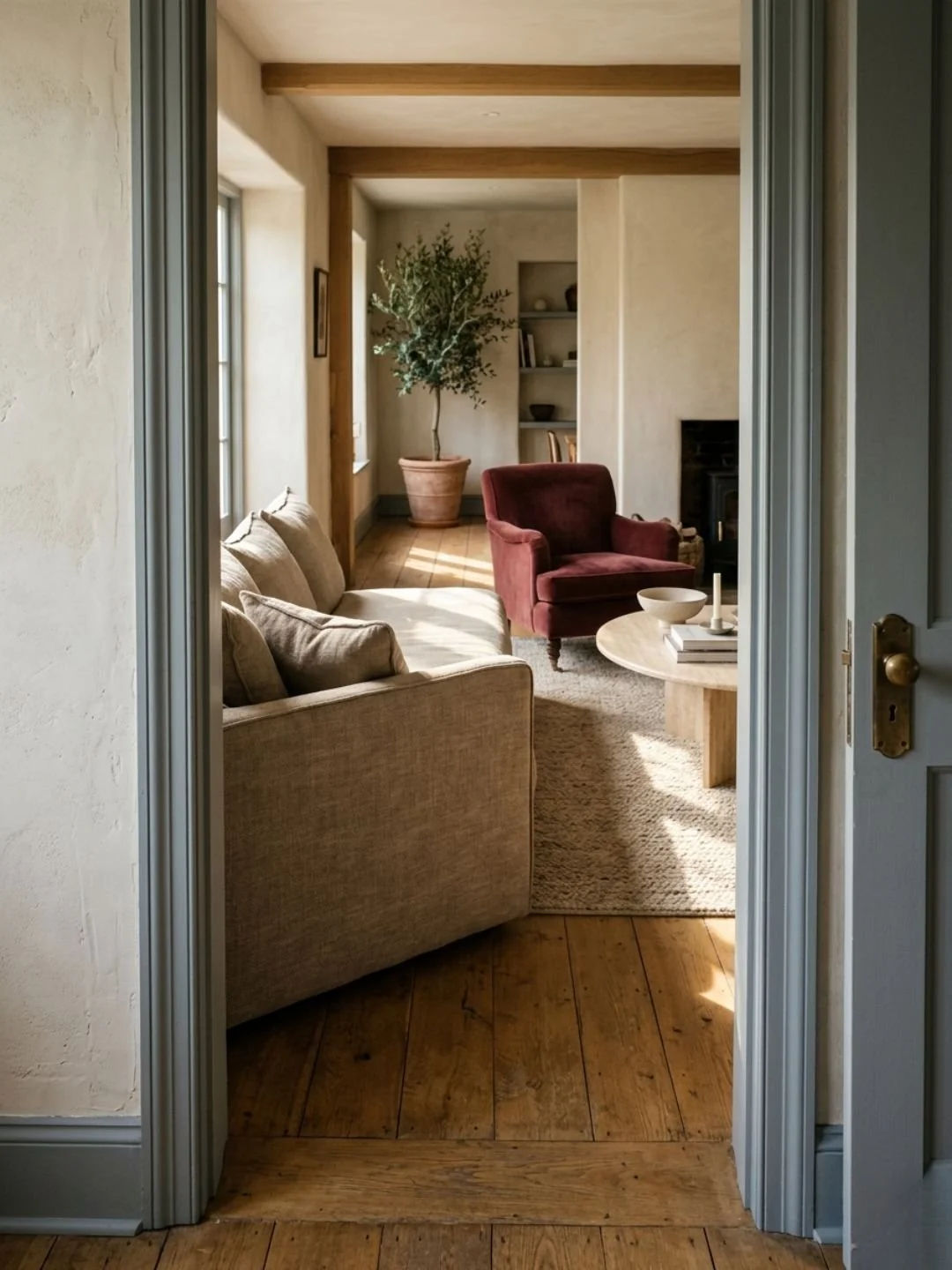
Two sofas facing each other across a coffee table is a common arrangement. It looks balanced. In practice, it can feel confrontational. You're sitting directly opposite someone, maintaining constant eye contact. Conversations take on a formal quality. I learned this from observing how people actually sit when given a choice. They tend to angle slightly away from direct opposition. They shift their position to be perpendicular or diagonal rather than face-to-face. My current arrangement has one sofa perpendicular to a pair of chairs. The coffee table is offset slightly rather than centered between them. This creates more varied sightlines. People can engage directly when they want, but they can also look away naturally without it seeming like disengagement.
Intimacy at Different Scales
Small groups and large groups need different geometries. For two or three people, a tighter arrangement works. Chairs pulled close, a small table between them. The intimacy comes from proximity. For larger groups, you need more space. If everyone is too close together, the conversation can't breathe. There's no room for someone to shift position or for multiple conversations to happen simultaneously. I think of this when arranging furniture for different scenarios. For everyday use with my partner, our seating is fairly compact. When we host, I pull one chair back slightly to open up the circle. The geometry expands to accommodate more people without losing cohesion.
The Role of Height
Seat height affects how people interact. Low seating feels casual and encourages longer stays. Higher seating, like dining chairs or bar stools, creates more energy but less comfort for extended conversation. I keep living room seating at a consistent height. When one chair sits noticeably higher or lower than the others, it creates visual and social imbalance. The person in that seat either feels towering or sunken, and it affects how freely they engage. Side tables and coffee tables should be at or slightly below seat height. This makes reaching for a drink natural rather than awkward.
Flexibility Within Structure
A good seating arrangement has some flexibility. Chairs that can be pulled in closer when needed. A pouf that can be added for extra seating. The configuration should accommodate different group sizes without requiring a full rearrangement. I avoid furniture that's too heavy to move. A substantial sofa stays in place, but accent chairs should be light enough to reposition. This allows the room to adapt to different gatherings without losing its basic structure.
What I Notice Now
I see seating geometry everywhere. Cafes where tables are positioned to encourage interaction versus those where everyone stares at their laptops. Waiting areas that create accidental intimacy by placing chairs too close. Living rooms that look magazine-perfect but don't actually support conversation. The goal is a layout that makes connection easy. Not forced, not formal, but natural. Where the geometry itself is doing the work of bringing people together.