There's a specific moment I pay attention to now when I host. It happens in the first thirty seconds after someone walks through my door. I watch their shoulders. If they drop, even slightly, I know the evening will go well.
This observation came after hosting the same friend twice in one month. The first time, I was running behind. I opened the door mid-task, apologizing for the mess, gesturing vaguely toward the kitchen. She stood in the entryway holding her coat, unsure where to put it. The second time, I was ready. I opened the door, smiled, took her coat, and said her name. She exhaled. The difference was immediate.
The First Five Minutes
Guests arrive carrying the weight of their day. They've navigated traffic, chosen an outfit, wondered if they should bring wine or flowers. By the time they reach your door, they're performing a small act of trust. The welcome either honors that trust or complicates it.
I've found that the most effective welcomes are simple and clear. I open the door with my full attention. I say their name. I take their coat immediately and put it somewhere specific, not just draped over a chair. These small gestures communicate: you are expected, you are wanted, I have prepared space for you.
Creating Immediate Ease
I keep a small table near the entry specifically for arrivals. Keys, phones, bags go there naturally. This matters more than it seems. When guests have a designated place for their things, they settle faster. They're not holding their purse through the first drink or wondering where to put their sunglasses.
The drink comes next, and it comes quickly. I don't ask what they want while they're still standing in the doorway. I have something ready. Sparkling water with lemon if it's early. Wine already poured if they drink. The offer is immediate and specific, not a question that requires decision-making.
The Choreography of Entry
I learned this from watching how people enter spaces they're unfamiliar with. They hesitate. They wait for cues. They mirror your energy. If you're scattered, they stay alert. If you're calm, they relax.
So I've started treating the entry as its own moment, separate from the rest of the evening. I don't rush it. I don't immediately introduce them to other guests. I give them fifteen or twenty seconds of just us. A brief exchange, a genuine hello, a moment to transition from outside to inside.
Then, and only then, do we move into the space where others are gathered. By that point, they've oriented. They have a drink. They know I'm glad they're here. Everything that follows builds on that foundation.
What This Looks Like in Practice
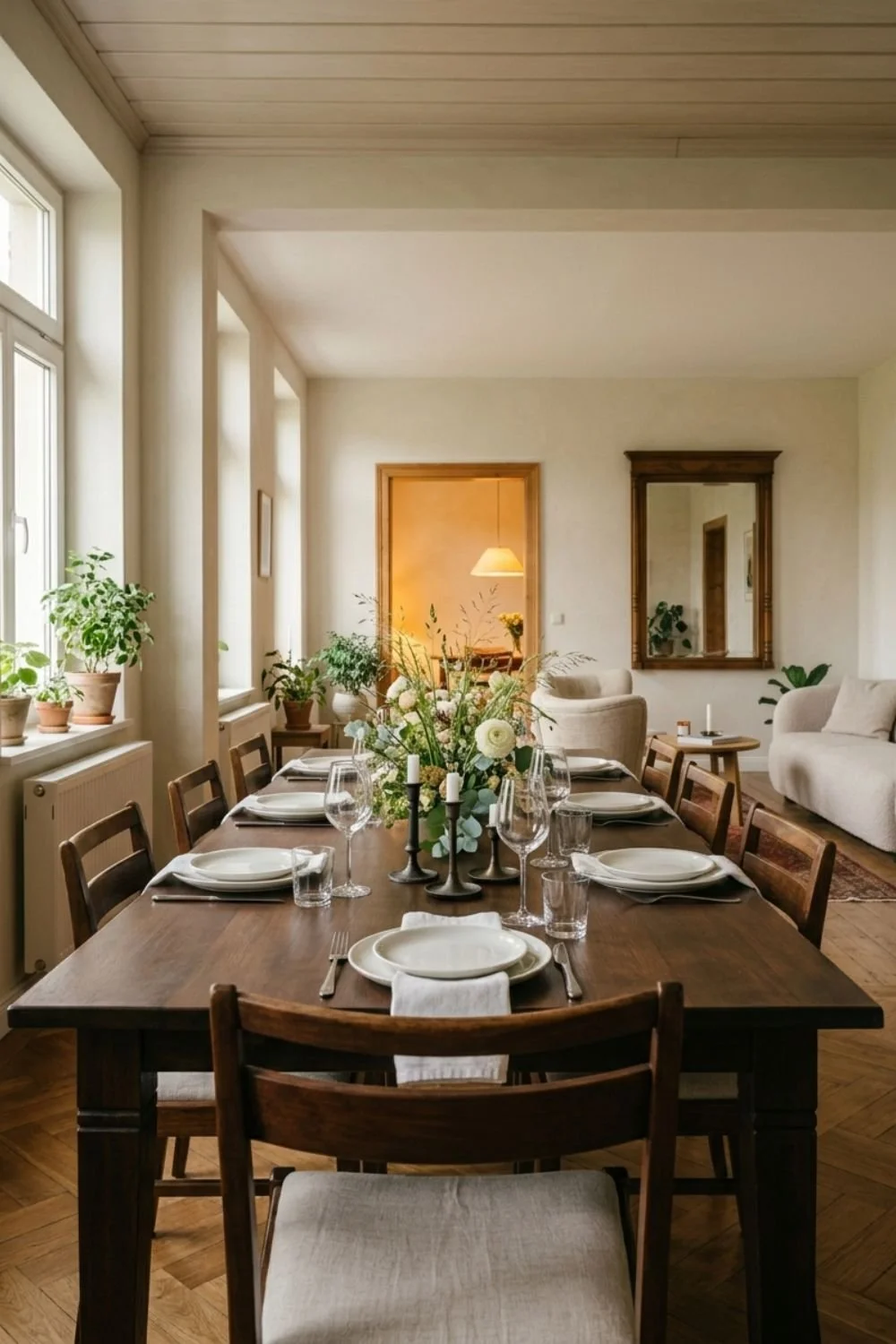
Before guests arrive, I finish everything that requires focused attention. The table is set, the food is ready, the music is playing. This isn't about perfection. It's about having my hands free and my mind clear when the door opens.
I position myself near the entry, not in another room. I'm not doing last-minute garnishes or adjusting place settings. I'm waiting, ready to receive.
When they arrive, the sequence is always the same. Door, name, coat, drink, breath, introduction. It takes less than two minutes, but it sets the trajectory for the entire evening. The guest has been received. Now they can be present.
This is the foundation. Everything else builds from here.
Disclaimer: AI-assisted writing applied.