I used to think hosting was about the meal, the lighting, the playlist. And those things matter, of course. But I've learned that what really shapes an evening is something less tangible: the guest's experience as it unfolds, moment by moment, from the first hello to the last goodbye.
This realization came after hosting the same group of friends twice in one month. Same menu, same music, roughly the same guest list. One evening felt effortless. The other felt like work. The difference wasn't in what I served or how the table looked. It was in how I thought about the evening's structure, and more specifically, how my guests moved through it.
The First Thirty Seconds
There's a specific moment I pay attention to now when I host. It happens in the first thirty seconds after someone walks through my door. I watch their shoulders. If they drop, even slightly, I know the evening will go well. If they stay tense, I have work to do.
That shift happens when a guest feels received rather than admitted. When they arrive, they're carrying the weight of their day, the minor anxiety of being somewhere new or semi-new, the small performance of being a good guest. The welcome either honors that vulnerability or compounds it. I open the door with full attention. I say their name. I take their coat immediately and put it somewhere specific. These gestures communicate: you are expected, you are wanted, I have prepared space for you.
The drink comes next, and it comes quickly. Not a question requiring decision-making while they're still orienting, but something ready. Sparkling water with lemon. Wine already poured. The offer is immediate because those first five minutes dictate the energy of the entire night.
Read more on the The Psychology of the Welcome in Hosting.
The Architecture of the Group
I used to invite people I liked and assume they would like each other. Sometimes this worked. Often it didn't. The evening would fragment into separate conversations that never merged, or one person would dominate while others went quiet. Now I think about the guest list the way an architect thinks about a room. Not just who will be there, but how they'll interact in relation to one another.
I want a mix of people who initiate and people who respond. The initiators ask questions, introduce topics, bridge silences. The responders offer depth, nuance, thoughtful replies. A room full of initiators becomes competitive. A room full of responders stalls. I also think about energy levels and avoid inviting people who are too similar. The architect next to the poet. Someone who travels constantly next to someone deeply rooted in one place. These pairings create the most interesting exchanges.
Six feels ideal to me. Small enough that one conversation can hold everyone, large enough that quieter voices don't feel exposed. When the composition is right, the conversation flows not because I'm managing it, but because I've created the conditions for it to emerge. Read more on the Social Geometry of the Guest List.
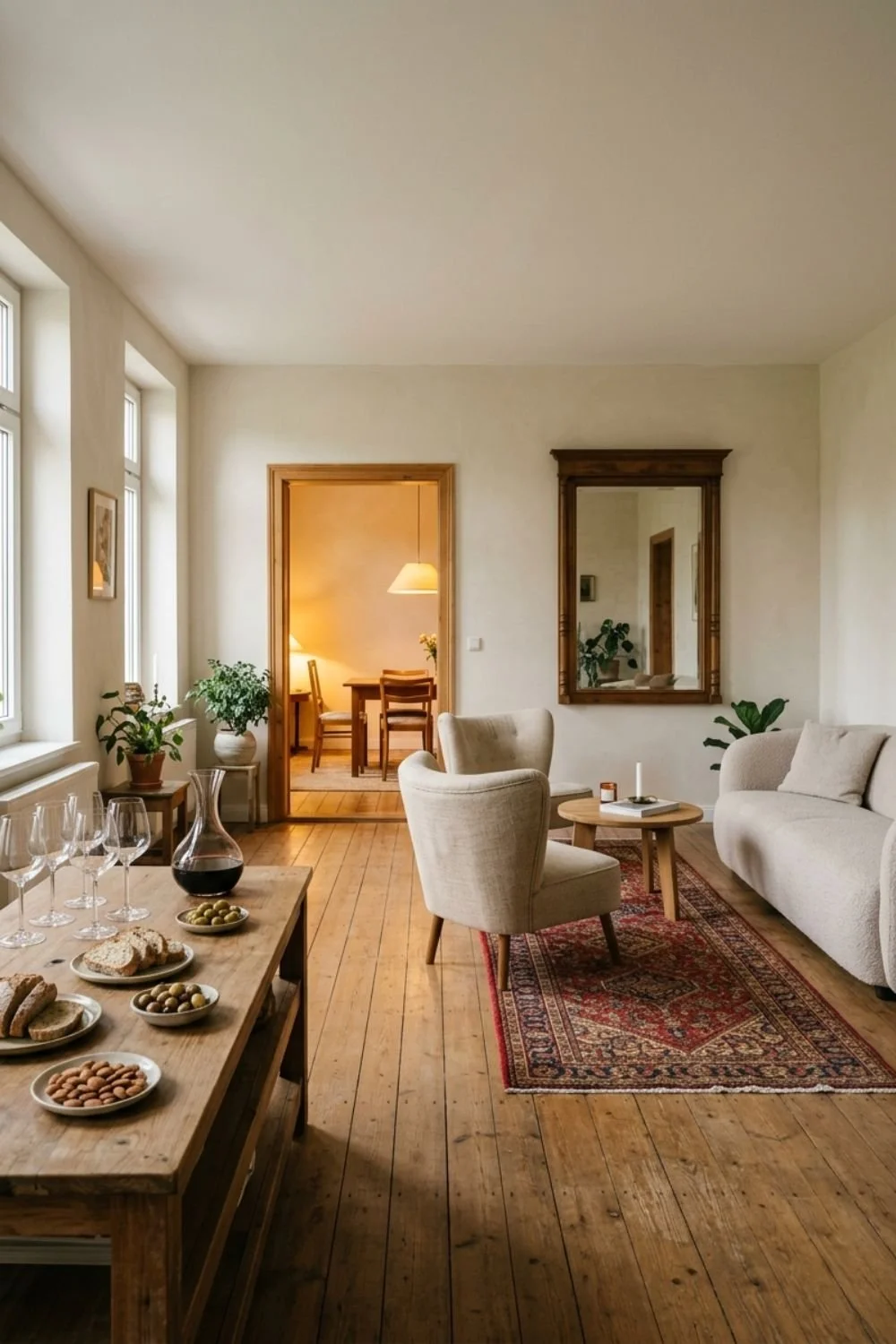
Movement and Discovery
I once attended a dinner where we sat at the table for four hours straight. The food was excellent, the company engaging, but by hour three I felt trapped. There was no natural break, no reason to stand or move. The evening became endurance. Since then, I've thought carefully about how guests move through my home during an evening.
I always start somewhere other than the dining table. The living room, the kitchen counter, sometimes outside. This first space is for arrival, for initial conversations. I keep it slightly under-furnished so people remain fluid, standing, leaning, moving between clusters. The drinks are here, but not the food. When we move to dinner, the shift in location marks a shift in rhythm.
After dinner, I create another reason to move. Coffee in another room. Dessert by the window. This isn't just about clearing plates. It's about giving people permission to shift, to reconfigure the group. Movement changes energy. It resets attention. It prevents the heaviness that comes from sitting in one place too long. Read more on Designing for Comfort and Discovery.
Reading the Rhythm
An evening has its own arc. It rises, plateaus, sometimes dips before rising again. There's a moment in most evenings when I can feel the energy start to shift. It might be a lull in conversation, someone checking their phone, a subtle restlessness. These moments used to make me anxious. Now I see them as information.
I watch for small signals. Are people leaning in or pulling back? Is the conversation becoming more animated or quieter? Are glasses being refilled or left half-empty? When I sense the energy flagging, I make small adjustments. I might clear plates, which creates movement and a natural pause. I might open a window if the room feels heavy. Sometimes I introduce a question, but only if it feels organic.
The best evenings are the ones where I forget I'm hosting. Where I'm laughing, engaged, part of the conversation. Those happen when the structure is solid enough that it doesn't need constant tending. When I've done the work upfront so I can be relaxed in the moment. Read more on Managing the Energy and Pace.
The Graceful Close
I once stayed at a dinner until two in the morning, not because I was having a wonderful time, but because I couldn't find a natural moment to leave. The host kept offering more wine, more stories, more reasons to stay. What should have been a lovely evening became something I needed to escape.
The close matters as much as the welcome. When I sense the evening winding down, I stop offering more. No more wine, no more food, no more reasons to extend. This isn't being inhospitable. It's being attentive to what the room actually needs rather than what I think should happen. I start creating small closures. I might begin clearing the table methodically. I might turn down the music slightly. These actions give people permission to start thinking about leaving without feeling pushed out.
The first person to say they need to go is doing everyone a favor. I make their exit easy. I don't protest or try to convince them to stay longer. Once one person leaves, others often follow within fifteen minutes. The first departure breaks the seal. The best endings leave people wanting slightly more rather than feeling they've stayed too long.
These practices have made hosting feel less like performance and more like offering. Less about impressing and more about creating space for people to be themselves. An evening designed from the guest's perspective unfolds naturally because you've thought through each transition, each shift in energy, each moment where someone might need guidance or permission. Read more on the Art of Graceful Conclusion.
Over the next five posts, I'll walk through each of these elements in depth. But the core principle remains the same: hosting is about seeing the evening through your guest's eyes and designing accordingly.
Disclaimer: AI-assisted writing applied.