Bridging Different Design Eras in Your Home
A look at how furniture from different periods can share a room without competing for authority.
For a long time I assumed that mixing design eras was something you needed a certain level of experience to do well, like it required a visual fluency I had not yet developed. What I discovered over time is that the underlying logic is simpler than it looks from the outside. The difficulty is not in the mixing. It is in understanding what quality to look for when you are deciding whether two pieces can coexist.
The question is not: are these from the same period? It is: do these share a sensibility? And sensibility is something that crosses decades and centuries with surprising regularity.
What Makes Pieces From Different Eras Work Together
Proportion is the most reliable bridge between periods. Furniture that shares a commitment to precise, considered proportion tends to coexist well regardless of when it was made. A Shaker side table from the nineteenth century and a Jasper Morrison stool from the 1990s have almost nothing in common historically, but both are disciplined, stripped of unnecessary ornament, and scaled with care. Put them in the same room and they read as a conversation rather than a conflict.
The same principle applies in reverse. Furniture from the same decade can clash badly if one piece was designed with careful attention to scale and another was not. Period is a weak predictor of compatibility. Sensibility is a much stronger one.
Period is a weak predictor of compatibility. Sensibility is a much stronger one.
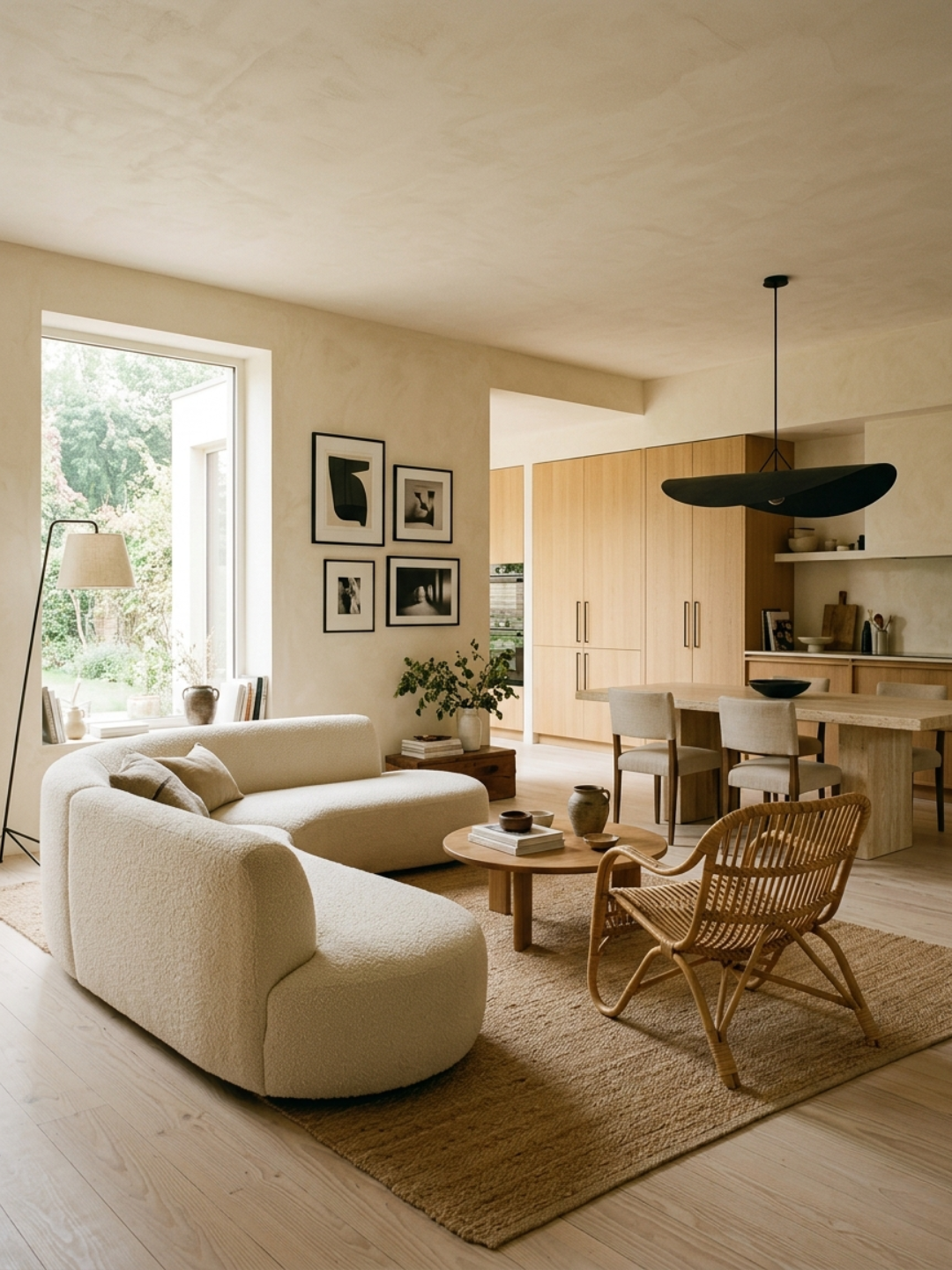
The Role of the Dominant Piece
When I am placing furniture from different eras in the same room, I think about which piece has the strongest formal presence and let that one set the terms. It becomes the reference point that everything else responds to.
In a room I worked on some time ago, the dominant piece was a nineteenth-century French farmhouse table: long, thick-topped, with turned legs and a surface worn to a beautiful patina. Everything else in the room was chosen in response to it. Contemporary chairs with a simple, unadorned profile that did not compete with the table's weight. A pendant light that was modern and unpretentious. A bench in raw linen that read as quiet beside the table's presence.
The table was the oldest thing in the room by a hundred years. It was also the most grounding thing in the room, which is why the mix worked. When a period piece is strong enough to anchor a room, contemporary elements around it do not feel incongruous. They feel like a deliberate frame for something worth looking at.
Where Mixing Eras Goes Wrong
The version of this that does not work is when pieces from different periods are in the room not because they belong there but because they were available. A room that has accumulated furniture without any connective logic will always feel restless, regardless of the individual quality of the pieces.
The other common problem is mixing eras without committing to any of them. A little mid-century, a little traditional, a little industrial, with nothing strong enough to anchor the whole. The result is a room where your eye does not know where to land. For mixing periods to work there needs to be at least one clear anchor, and everything else needs to be chosen in conscious relationship to it.
This is not about rules. It is about having a point of view. The rooms that mix eras most successfully are always the ones where you can sense that someone made decisions, that nothing arrived by accident, even when the final result looks effortless.
Disclaimer: AI-assisted writing applied.