Designing for Flow and Movement in Your Home
The first apartment I furnished on my own had a beautiful living room. High ceilings, good light, herringbone floors. I placed the sofa against the main wall, added two chairs, a coffee table. It looked right in photos. But living in it felt awkward. I'd walk in from the hallway and have to navigate around the side of a chair to reach the sofa. Guests would pause at the doorway, visibly calculating their route. The coffee table was positioned so that reaching for a glass required a small forward lean that became annoying over time. The furniture was fine. The arrangement ignored how we actually moved.
Mapping Your Natural Pathways
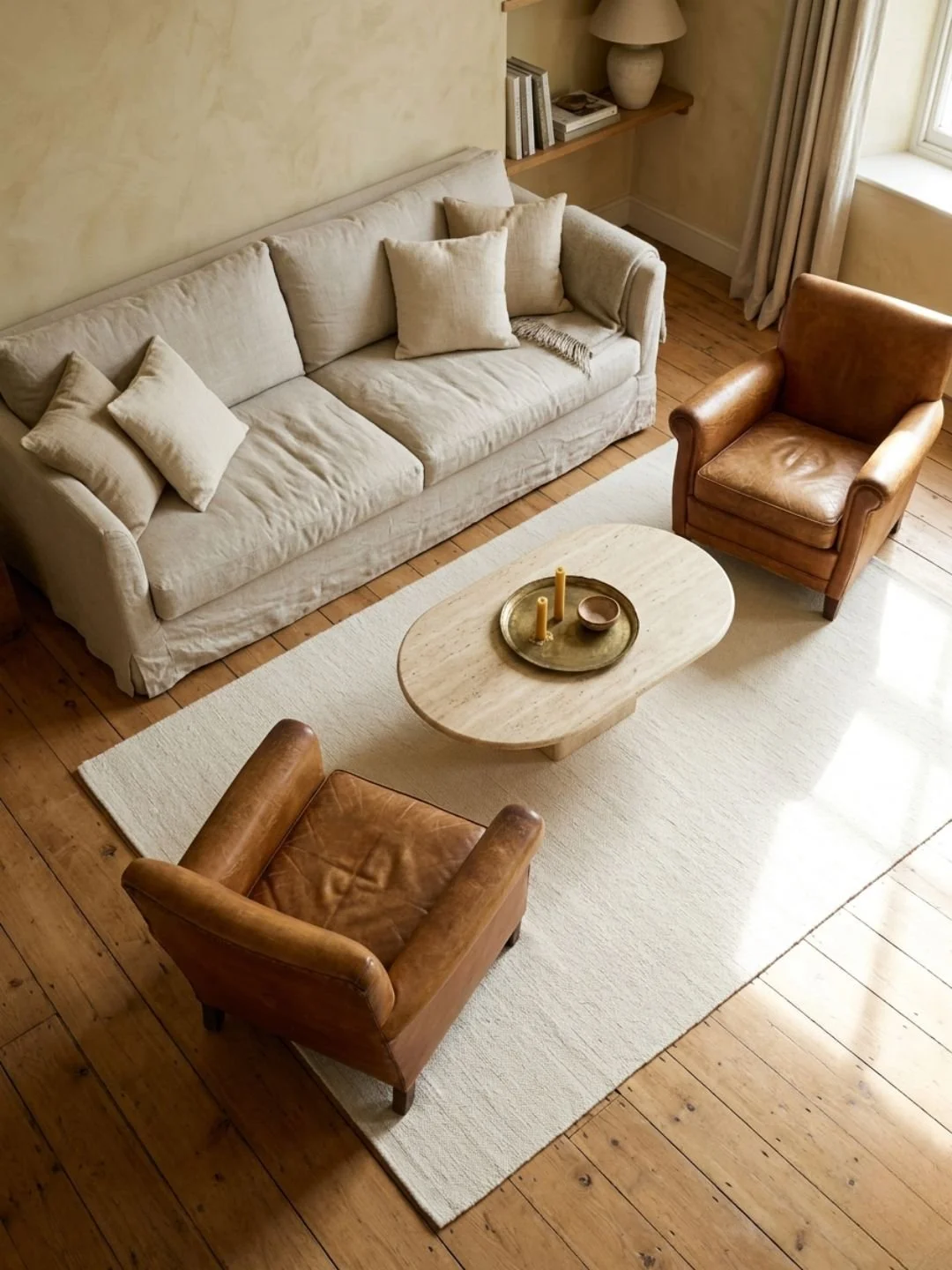
Before placing furniture, I spend time observing the room empty. Where does the door open? Where do windows pull your eye? What's the most direct route from the entrance to the seating area? These pathways exist whether you acknowledge them or not. You can either work with them or constantly fight against them. I trace the main routes: entry to seating, seating to windows, one conversation area to another. These become the clearways that need to stay open. Furniture defines space, but it shouldn't obstruct movement. In my current living room, the main pathway runs from the entry along the left side of the room toward the windows. I keep that corridor clear. The sofa and chairs are grouped to the right, creating a destination without blocking the natural flow.
The Difference Between Clearance and Comfort
There are standard measurements for furniture spacing. Eighteen inches between sofa and coffee table. Three feet for major walkways. These are useful starting points, but they don't account for your specific patterns. I pay attention to what feels comfortable rather than what measures correctly. Can I set down a cup without stretching? Can someone walk behind the sofa without turning sideways? Does the path from the kitchen to the dining table feel direct or does it require small adjustments? In the dining room, I leave more space between the table and the wall than most guides recommend. We pull out chairs fully when we sit. Guests need to walk behind seated people to reach their places. That extra eight inches makes the difference between fluid movement and constant apologies.
Furniture That Guides Rather Than Blocks
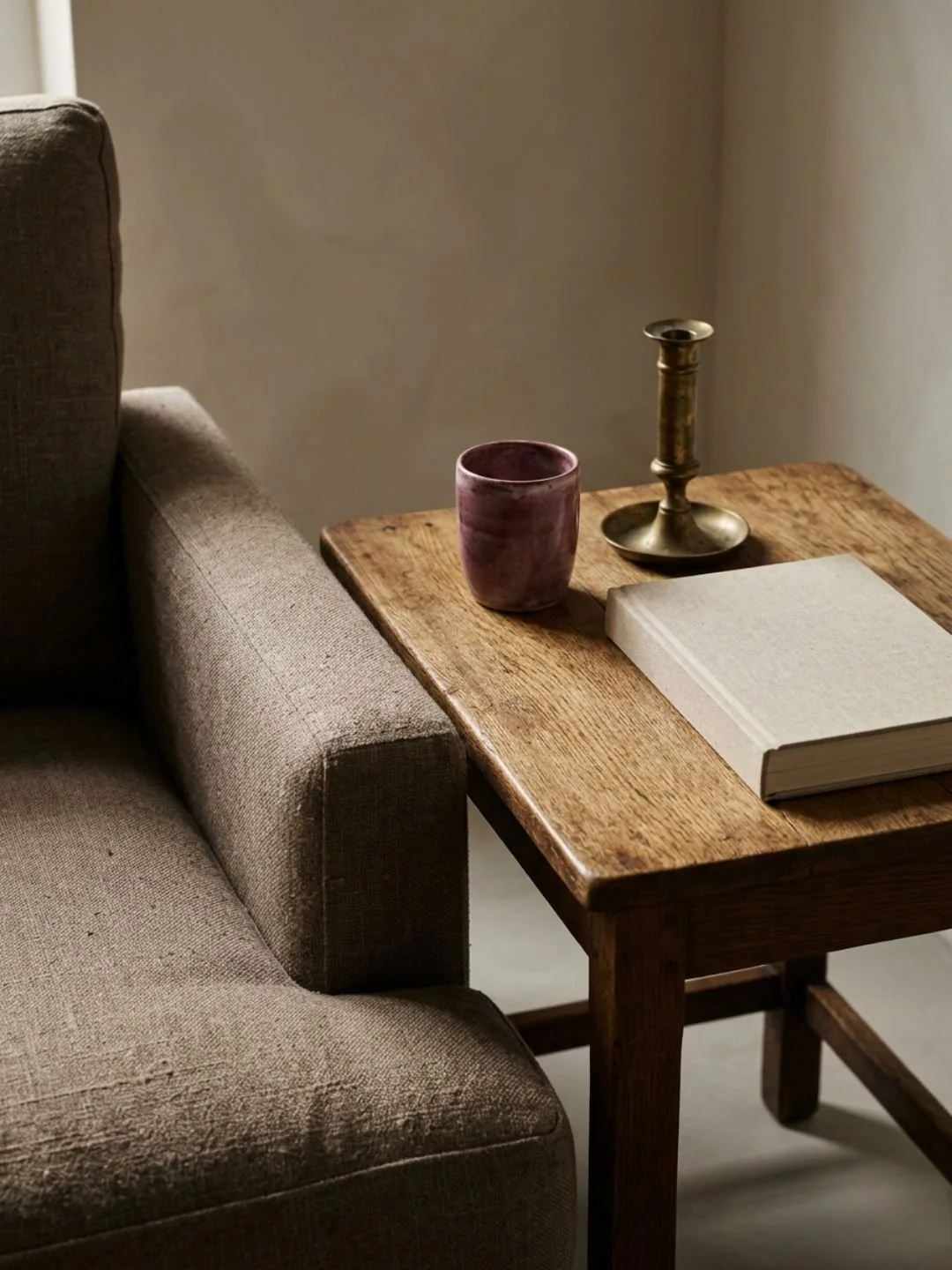
The best arrangements create soft boundaries without hard barriers. A sofa perpendicular to the main walkway suggests a seating area without forcing you to walk around it. A console table behind a sofa defines a zone while keeping sightlines open. I avoid pushing all furniture against walls. A sofa floated a few feet into the room creates a more intimate seating area and leaves space for movement behind it. This works especially well in open-plan layouts where you need to differentiate zones without adding walls. Side tables need to be reachable without getting up, but not so close that they interfere with sitting down or crossing your legs. I place them within arm's reach of the sofa, usually eight to twelve inches from the edge.
The Entry Moment
How a room receives you matters. I pay attention to what you see first and where that sightline naturally draws you. If the entry opens directly onto the seating area, I position the sofa so you're looking at its back or side rather than directly at people sitting on it. This gives both you and them a moment before engagement. In narrow rooms, I create a small clearing near the door. A place to pause, set down bags, orient yourself. This might just be two feet of empty floor, but it prevents the feeling of walking straight into furniture.
Testing the Arrangement
I live with a layout for at least a week before deciding it works. Some issues only emerge through use. A chair that seemed well-placed turns out to block the view from the sofa. A coffee table at the right distance for sitting feels too close when you're moving around it. I notice where I naturally place things. If I keep setting my book on the floor instead of the side table, the table is in the wrong spot. If I'm constantly adjusting a chair that's been bumped, it's too far into the pathway. The room should accommodate your habits, not force you to adjust to the furniture.
When to Break the Rules
Sometimes a room's architecture creates awkward proportions. A door in an odd location. A radiator that limits furniture placement. Windows that take up most of one wall. In these cases, you work with what you have rather than against it. I had a bedroom where the only logical place for the bed blocked the closet slightly. Instead of abandoning that placement, I made sure to leave enough room for the closet door to open fully, even if it meant the bed wasn't perfectly centered. Good flow isn't about achieving an ideal layout. It's about creating the most natural movement pattern within your specific constraints.
What Changes
Once you start thinking about flow, you notice it everywhere. Restaurants where you have to squeeze past tables. Hotel lobbies that guide you effortlessly toward the desk. Living rooms where you can move freely versus ones where you're always navigating around furniture. A room with good flow doesn't announce itself. It just works. You move through it without thinking. That ease is the goal.