Hosting as a Creative Expression
I think about an evening with guests the way I think about arranging a room. There's a vision, a sensibility, a particular atmosphere I'm trying to create. The menu, the setting, the timing are all elements in a larger composition.
This isn't about performance or impressing people. It's about using the occasion as a way to express something specific. A point of view about what makes an evening worthwhile.
The Canvas of an Evening
When I plan a gathering, I start with a feeling I want to create. Sometimes it's intimate and conversational. Sometimes it's more energetic, with people moving between spaces. Sometimes it's contemplative and slow.
That feeling becomes the organizing principle for every decision that follows. What we eat, how the table looks, what music plays, these all flow from that initial intention.
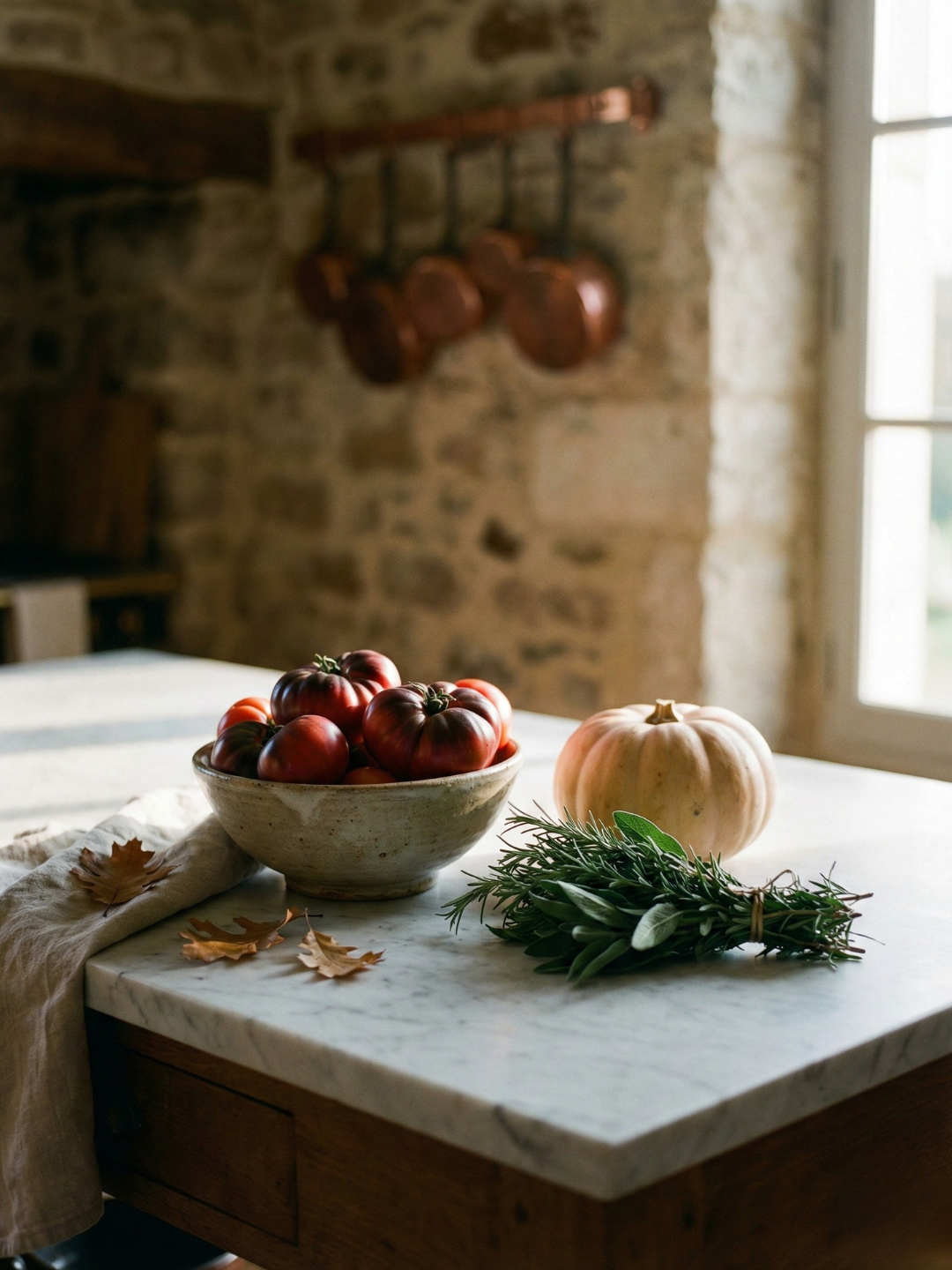
Last fall, I wanted to create an evening that felt like early autumn, that in-between time when summer hasn't quite released its hold. I served tomatoes while they were still good, alongside the first squash of the season. The table had both late roses and branches with turning leaves. The whole thing sat in that transitional moment.
It was a small thing, but it gave the evening a kind of thematic coherence that people noticed. Not consciously, maybe. But they commented on how the meal felt right for that particular October evening.
Working Within Constraints
I find constraints useful. A limited budget. A small kitchen. Dietary restrictions. These aren't obstacles to creativity, they're actually helpful frameworks.
When I can't rely on expensive ingredients or elaborate techniques, I have to think harder about other elements. The visual composition. The pacing. The storytelling around what I'm serving.
Some of my most successful gatherings have been the simplest. A pot of pasta with good olive oil. Bread and cheese. Wine. But the table was beautiful. The conversation was given space. The whole evening had a deliberateness to it.
Personal Signature
Over time, I've developed certain elements that recur in my hosting. Not rules, exactly. More like a personal vocabulary.
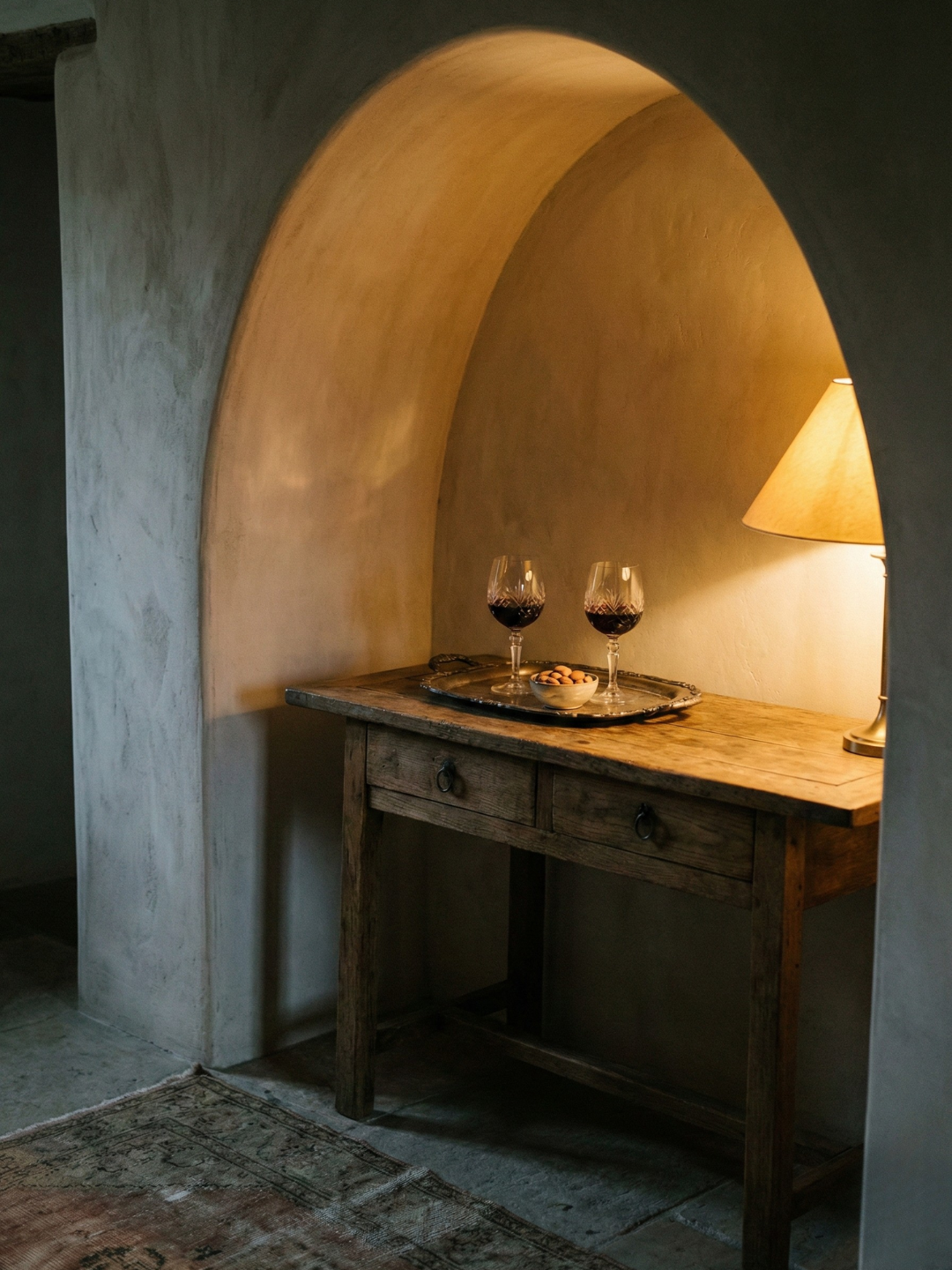
I almost always use candlelight. I prefer serving family-style rather than plated. I like having something baked in the oven when people arrive, so the house smells like food and welcome.
These aren't calculated decisions anymore. They've become part of my natural approach. They're how I express my taste through the medium of a gathering.
I also have favorite color combinations I return to: white and green, cream and gray, warm browns with touches of black. These show up in my table settings the way they show up in how I dress and arrange my home.

The Narrative Arc
An evening, like any creative work, benefits from structure. There's an opening, a development, a resolution.
I think about what happens when people first arrive. That tentative moment before everyone settles in. I make sure there's something to do with their hands: a drink to hold, something to nibble.
Then there's the transition to the table. This is a shift in energy. People move from standing to sitting, from casual to focused. I mark that transition somehow, even if it's just lighting new candles or changing the music.
The meal itself has its own arc. Lighter flavors first. Something richer in the middle. A clean, simple ending. Not because there's a rule about it, but because it creates a sense of progression.
After dinner, there's often a loosening. Coffee or tea. Maybe something sweet. People shift in their chairs. The conversation changes tone. I let this happen naturally, but I've created the conditions for it.
Improvisation Within Structure
Having a plan doesn't mean rigidity. Some of the best moments at my gatherings have been unplanned. Someone brings an unexpected bottle of wine that changes what we drink. Conversation takes a turn that shifts the whole energy. Dinner runs long and we skip dessert entirely.
The structure is there to support, not to dictate. It gives me confidence, which allows me to be flexible.
I remember an evening last spring when it unexpectedly warmed up. We'd planned to eat inside, but someone suggested moving to the terrace. We carried everything outside, rearranged on the fly, and ended up eating under the stars. The formality I'd planned gave way to something more spontaneous, and it was better for it.
The Details as Expression
I pay attention to small moments that might go unnoticed but that collectively create the experience.
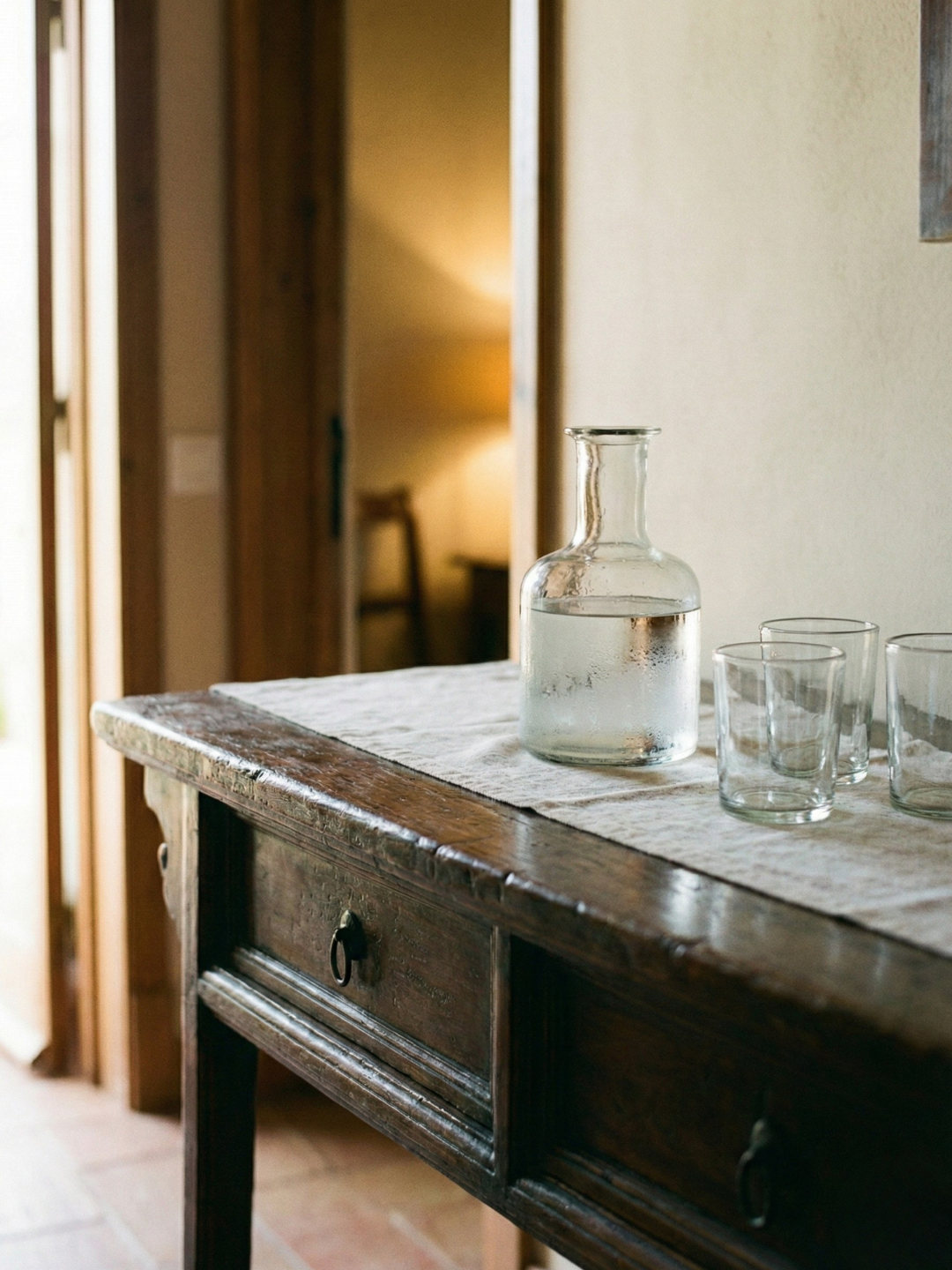
The way bread is presented: torn rather than sliced, in a linen-lined basket. The water: served in a carafe with lemon and ice, not from the tap. The salt: in a small dish with a tiny spoon, not a shaker.
None of these things is essential. But together, they communicate care. They show that I've thought about the experience from multiple angles.
This is where taste comes in. Not expensive taste, but considered taste. The ability to discern what matters and what's extraneous.
Reflection and Refinement
After people leave, I think about what worked. Not in a critical way, but as a form of creative feedback.
The timing might have been off. Or the pacing might have been perfect. The dessert might have been too sweet, or exactly right. The seating arrangement might have facilitated great conversation, or it might have created awkward groupings.
I keep these observations somewhere I can reference them. Not as rules, but as data points that inform future gatherings.
Over time, this builds into a personal methodology. An understanding of my own strengths and limitations as a host. What I can pull off easily. What requires more effort than it's worth. What feels authentic to me and what feels borrowed.
The Difference Between Hosting and Entertaining
I don't think of what I do as entertaining. That word carries connotations of performance and audience.
Hosting, to me, is about creating conditions. About setting a stage where connection can happen. The creativity is in service of something larger than showing off your skills or taste.
The best compliment I've received after an evening wasn't about the food or the table. It was someone saying they'd had one of the best conversations they'd had in months. That the evening had given them space to think.
That's what I'm after. The creative expression is a means, not an end.
Finding Your Own Approach
Using hosting as creative expression requires knowing what you actually care about. Not what you think you should care about, but what genuinely interests you.
Maybe you're drawn to bold, contrasting flavors. Maybe you love vintage textiles and want to showcase them. Maybe you're fascinated by wine and want to create pairings.
Whatever it is, that's your material. That's what you work with.
The goal isn't to copy anyone else's approach, including mine. It's to develop your own vocabulary. To find the elements that feel natural to you and then use them intentionally.
An evening with guests is temporary, yes. But so is a meal, a conversation, a beautiful light at a certain time of day. The temporariness doesn't make it less worth doing well.
There's satisfaction in creating something whole, even if it only exists for a few hours. In shaping an experience that has coherence and intention. In using an ordinary evening as an opportunity for creativity.
This is what keeps me interested in hosting. Not the obligation of it, but the possibility of it. The chance to make something considered and complete, and then to share it.