Selecting the Primary Anchor Piece for a Room
Every room I've designed well has one thing in common: a single piece that carries the most visual weight. Not the largest piece necessarily, but the one with the strongest presence. Everything else supports it.
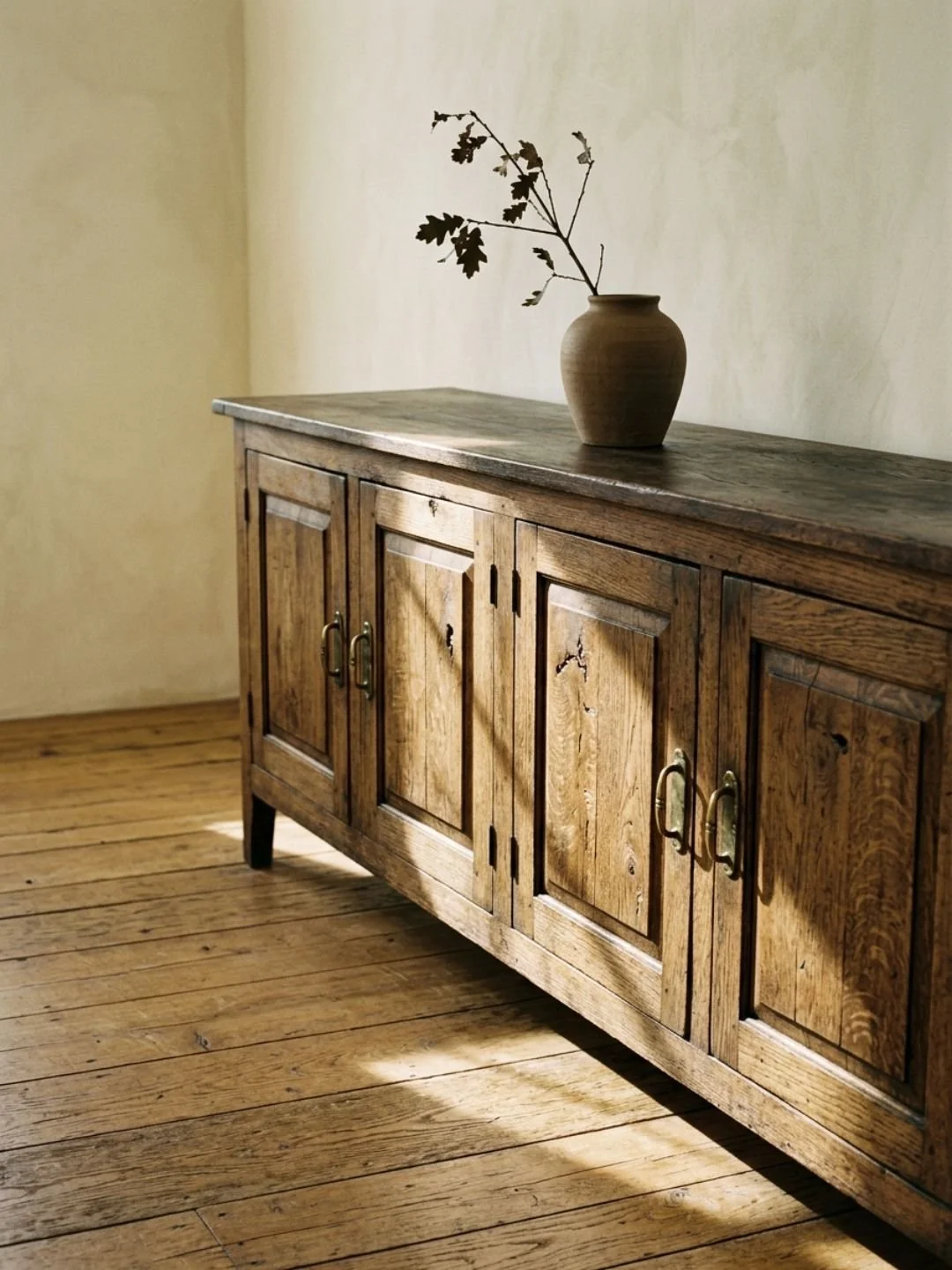
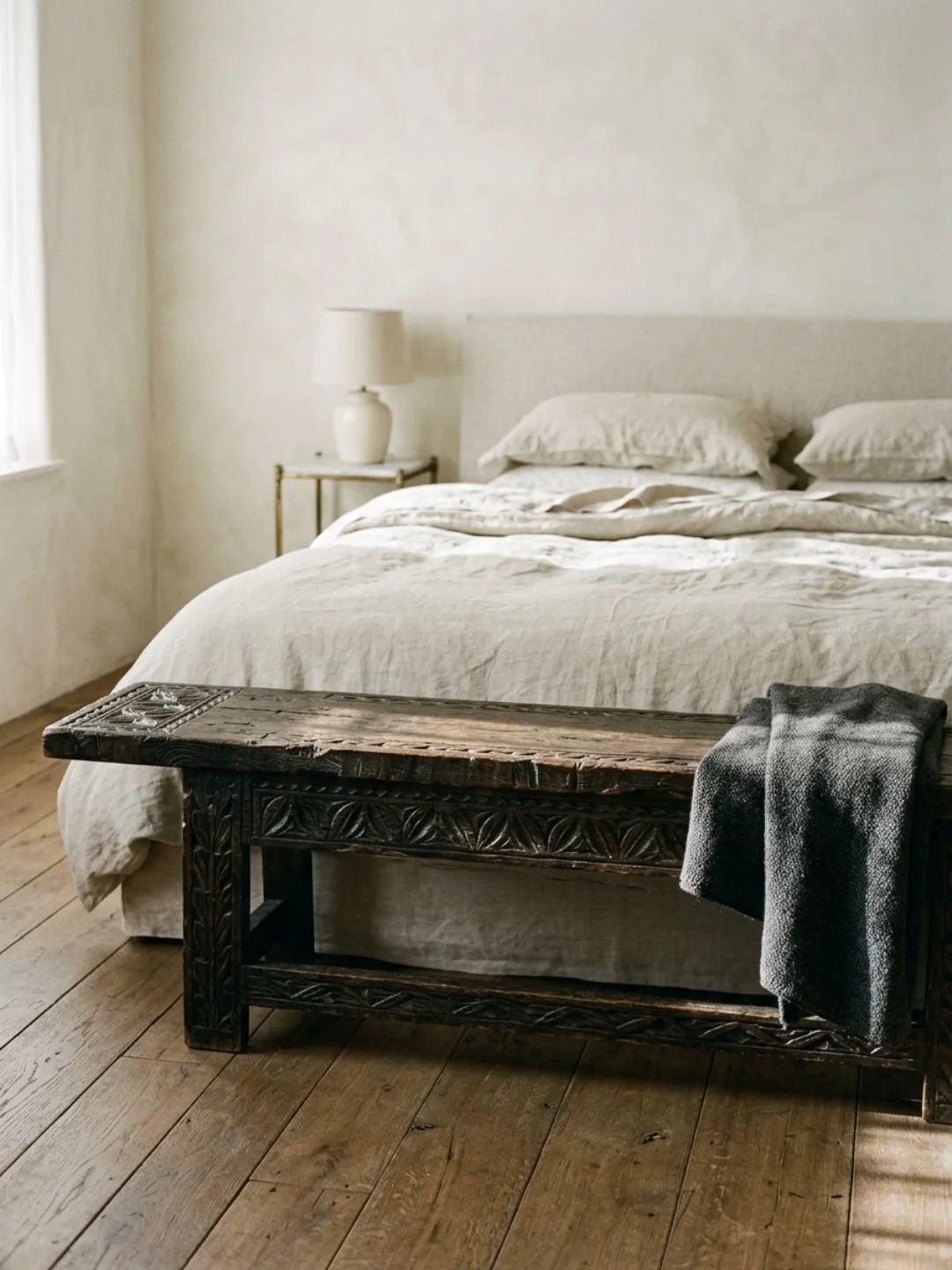
In my living room, it's a vintage oak credenza. In the bedroom, a carved wood bench at the foot of the bed. In the dining room, an oversized abstract painting.
These pieces set the tone. Because they exist, everything else can be quieter.
What Makes an Anchor
An anchor piece has three qualities: it's visually substantial, it has personality, and it doesn't compete with the rest of the room.
Visually substantial means it has enough scale or detail to register as important. A small decorative object can be beautiful, but it won't anchor a space. The anchor needs to hold its own.
Personality means it has a distinct character. Something about its form, material, or finish makes it memorable. In my case, the credenza has strong grain patterns and visible joinery that give it texture and depth.
The third quality is the hardest to explain. The anchor should feel natural in the space, not forced. It shouldn't look like it's trying to be the star. It just is.
Building Around One Strong Object
Once you identify the anchor, the rest of the room becomes easier to compose. You're not trying to make every piece special. You're creating a context that allows one special piece to register fully.
In my living room, the credenza is the most interesting object. Because of that, I keep the sofa simple. Neutral linen, clean lines, no unnecessary detail. The side tables are minimal steel and glass. The rug is solid color, no pattern.
This restraint isn't about minimalism. It's about hierarchy. The credenza can have visual complexity because everything else is giving it space.
I see rooms where every piece is competing. A patterned sofa, a bold rug, sculptural chairs, elaborate lighting. Individually, each might be beautiful. Together, they cancel each other out. Your eye doesn't know where to land.
Choosing the Right Piece
The anchor doesn't have to be expensive or rare. It needs to be distinctive enough to carry the room's character.
In a bedroom, it might be a headboard with interesting texture. In a dining room, a large-scale piece of art or a substantial table with visible craftsmanship. In an entryway, a mirror with a strong frame or a console table with architectural presence.
I look for pieces that have material interest. Wood with grain variation. Stone with veining. Metal with a patina. These surfaces age well and continue to reveal detail over time.
I also consider what the room needs tonally. If the space feels too neutral, the anchor might be something with color. If it's already visually busy, the anchor might be simpler but with exceptional proportions.
Placement and Prominence
The anchor should occupy a position where it can be fully appreciated. Not hidden in a corner or blocked by other furniture.
In my living room, the credenza sits on the wall opposite the seating area. When you sit on the sofa, it's in your sightline. It's the first thing you see when you enter the room. This placement gives it prominence without making it feel staged.
I avoid placing the anchor where it will be covered with clutter. A beautiful console table that becomes a dumping ground for mail loses its impact. The anchor needs to stay visible and unobstructed.
Everything Else as Support
Once the anchor is in place, other pieces become supporting elements. They don't need to match the anchor, but they should complement it.
If the anchor is heavy and substantial, lighter pieces balance it. If the anchor has warm tones, cooler accents create contrast. The goal is dialogue, not repetition.
In my bedroom, the carved wood bench is dark and textured. The bedding is pale linen. The side tables are simple brass and marble. Nothing tries to compete with the bench, but everything relates to it through contrast.
When You Don't Have an Anchor
If a room feels scattered or lacks identity, it might be missing an anchor. Everything is pleasant, nothing stands out. The space works functionally but doesn't have character.
In these cases, I look for what's missing. Usually it's a piece with more personality than anything currently in the room. Something that feels slightly bolder or more specific than the safe choices I've made.
This might mean replacing an existing piece or adding something new. Either way, the anchor changes the room's dynamic. It gives you permission to simplify everywhere else because you have one thing doing the expressive work.
What Shifts
Once you understand anchors, you stop trying to make every piece interesting. You look for one object worth building around and let everything else be supportive.
Rooms become more coherent. Not because everything matches, but because there's a clear hierarchy. One voice speaking clearly, others in harmony.