Understanding Scale and Proportion
I once helped a friend arrange her new apartment. She'd bought a beautiful sectional, the kind that photographs well in showrooms. When it arrived, it consumed her living room. Not because the room was small, but because the sofa was designed for a different kind of space. The proportions were wrong, and no amount of styling could fix it.
Scale and proportion are the invisible architecture of a room. They determine whether a space feels balanced or awkward, whether furniture seems purposeful or arbitrary. You can have the most beautiful pieces in the world, but if they're the wrong size for the room, the space will never settle.
What Scale and Proportion Actually Mean
Scale refers to the size of an object in relation to the space it occupies. A large sofa in a large room is appropriately scaled. That same sofa in a small room is out of scale.
Proportion is about the relationship between objects and how their dimensions relate to each other. A long, low credenza paired with a tall, narrow lamp creates an interesting proportion. A squat lamp on that same credenza would feel compressed.
These concepts work together. Getting the scale right means your furniture fits the room. Getting the proportion right means the individual pieces relate to each other in a way that feels intentional.
Why Size Matters More Than Style
I've seen rooms where every piece is stylistically perfect but the space still feels off. The issue is almost always scale.
A mid-century modern chair is a beautiful object. But if it's too small for the sofa it's paired with, it looks like an afterthought. If it's too large, it dominates and throws the balance off. The style is irrelevant if the size doesn't work.
This is why I always consider dimensions before I consider aesthetics. A room with correctly scaled furniture in mismatched styles will feel more composed than a room with perfectly matched styles in the wrong sizes.
Common Scale Mistakes
Certain scaling errors show up repeatedly. They're easy to make because we often shop for furniture in isolation, without considering how it will relate to everything else.
Undersized Furniture in Large Rooms
This is the floating sofa problem. A small loveseat in the middle of a spacious living room looks lost. It doesn't anchor the space, and it creates an awkward visual gap between the furniture and the walls.
I lived with this issue for a year in my first house. I'd moved my apartment furniture into a much larger space, and everything felt diminished. The dining table that worked perfectly in a compact room looked like patio furniture in the new dining room.
The fix wasn't to fill the room with more furniture. It was to replace key pieces with appropriately scaled versions.
Oversized Furniture in Small Rooms
The inverse problem. A massive sectional in a modest living room makes the space feel cramped and difficult to navigate. You sacrifice flow and breathing room for seating you probably don't need.
I see this often with dining tables. People buy the largest table that technically fits in the room, but they don't account for the space needed to pull out chairs or walk around the perimeter. The result is a room that feels tight even when it's empty.
Inconsistent Visual Weight
This is when some pieces in a room feel substantial and others feel flimsy. A heavy, solid wood dining table paired with delicate wire chairs. A chunky coffee table next to a slender sofa.
Visual weight isn't just about actual mass. It's about how much presence an object has. A large, low-slung sofa can have less visual weight than a tall, narrow bookshelf because of how they occupy space.
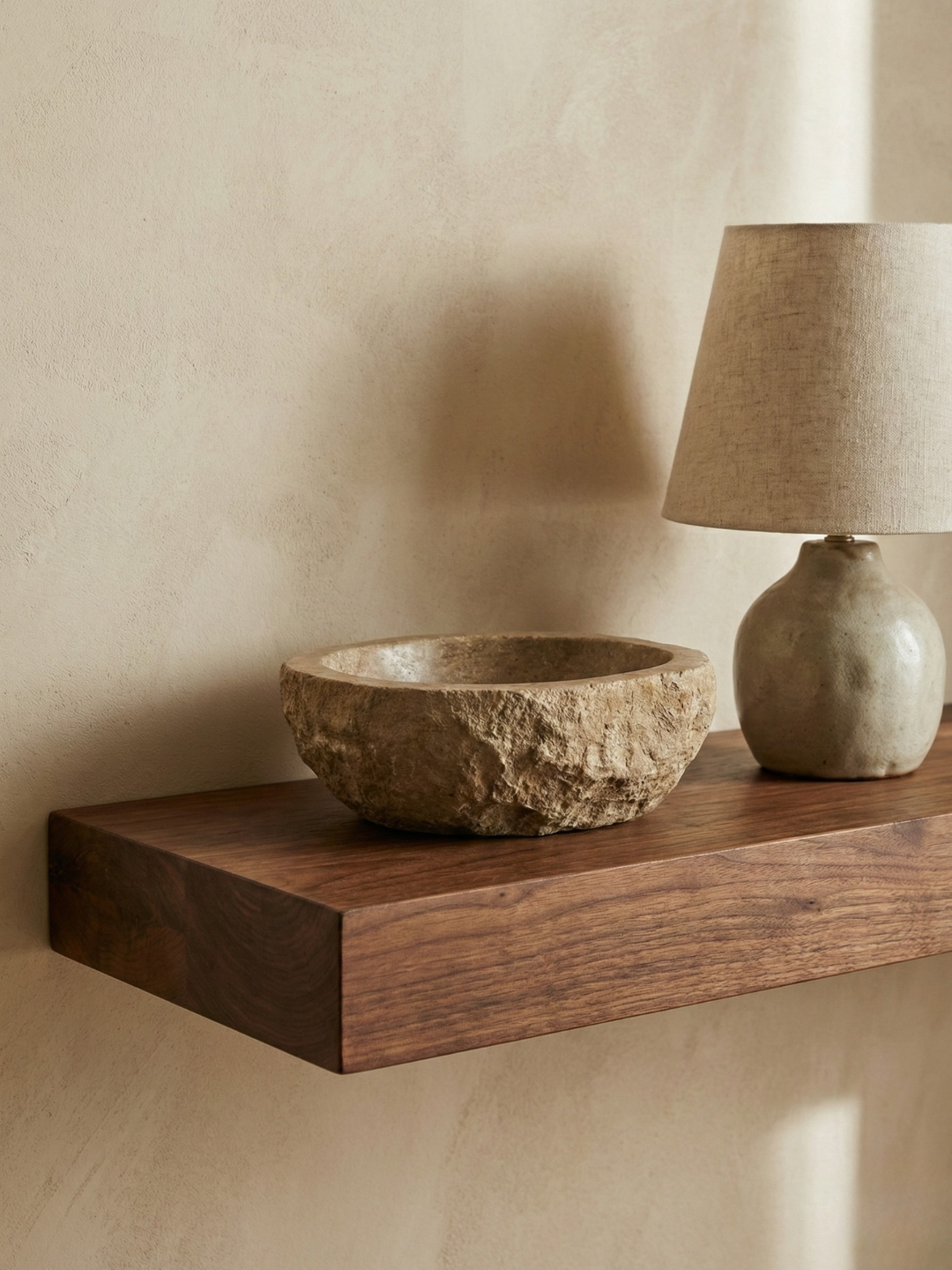
I aim for consistency in visual weight. If my sofa is substantial, my chairs should match that sensibility. If my coffee table is minimal, my side tables should follow suit.
How to Evaluate Scale
When I'm considering a piece of furniture, I use a few methods to determine if it will work in the space.
Measure Everything
This seems obvious, but most people don't do it. I measure the room, the available wall space, the clearance needed for doors and walkways, and the existing furniture. Then I measure the piece I'm considering.
I also account for the three-dimensional nature of furniture. A sofa's footprint isn't just length and width. It has height and depth, and those dimensions affect how it relates to other objects in the room.
Consider Ceiling Height
A room with high ceilings can handle taller furniture. A room with standard or low ceilings needs pieces that sit lower to the ground to avoid making the space feel compressed.
I have 10-foot ceilings in my living room, which allows me to use a tall bookshelf without it feeling overwhelming. In my bedroom, where the ceilings are 8 feet, I keep furniture low. The bed has a minimal frame, and the dresser is wide rather than tall.
Use the Two-Thirds Rule
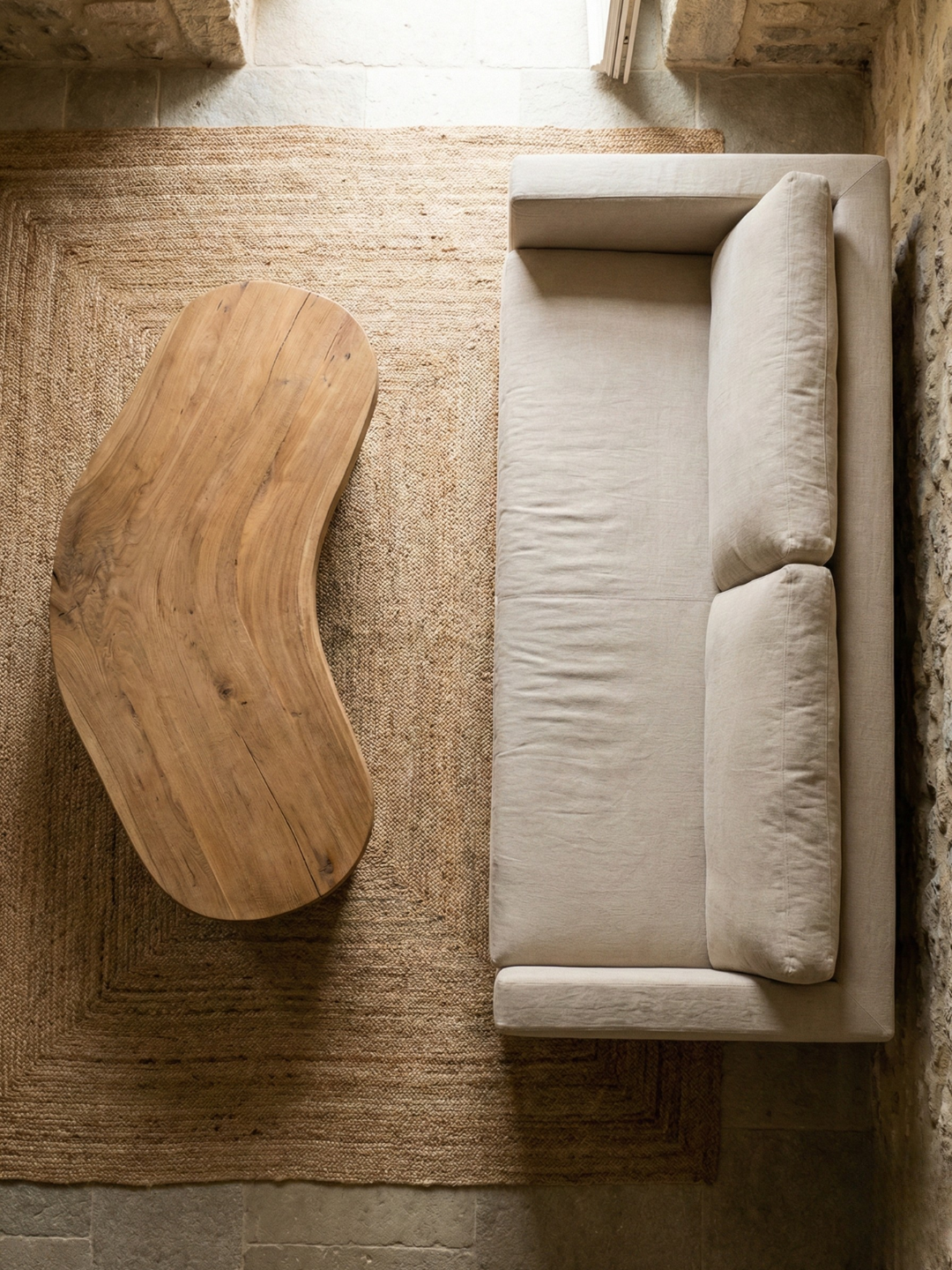
For seating arrangements, I aim for the sofa to take up about two-thirds of the wall it's placed against. This creates visual balance without overwhelming the space or leaving too much empty wall.
This isn't a rigid formula, but it's a useful starting point. If a sofa takes up the entire wall, it can feel cramped. If it takes up less than half, it can feel undersized.
Test the Flow
Before committing to a piece, I map out how people will move through the room. Is there at least 30 inches of clearance for walkways? Can you navigate around furniture without feeling like you're maneuvering through an obstacle course?
I once bought a coffee table that looked perfect in the showroom. When I got it home, it was too deep for the space between my sofa and TV console. You had to turn sideways to get past it. I returned it and found a shallower option.
Proportion Between Objects
Once the scale is right, proportion is about how individual pieces relate to each other.
Height Variation
A room where everything is the same height feels flat. I create visual interest by varying the height of furniture and decor.
In my living room, the sofa is low, the bookshelf is tall, and the side tables are mid-height. This creates a rhythm that guides your eye through the space rather than letting it rest on a single plane.
Balancing Silhouettes
I think about the overall shape of furniture, not just the size. A round coffee table balances the linear shape of a rectangular sofa. A tall, narrow plant softens the horizontal expanse of a low credenza.
These proportional relationships create a sense of completeness. The room feels like it's in conversation with itself rather than being a collection of unrelated objects.
The Rule of Threes
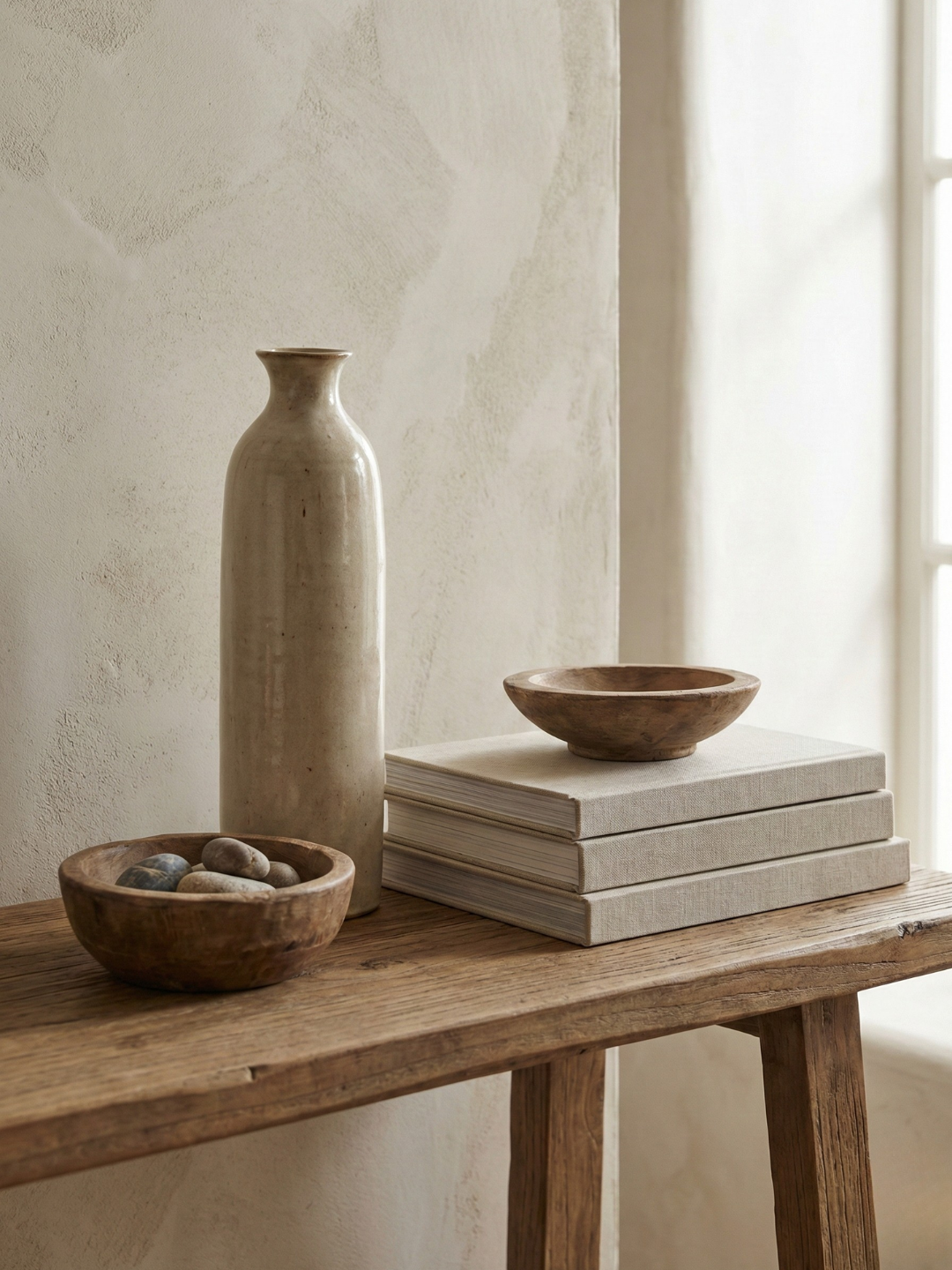
When grouping objects, I find that three items of varying heights create the most pleasing proportion. A tall candlestick, a medium vase, and a small dish. The variation keeps the grouping from feeling static.
This applies to furniture arrangements too. A sofa, a lounge chair, and an ottoman create a more dynamic seating area than three identical chairs.
Real Examples From My Spaces
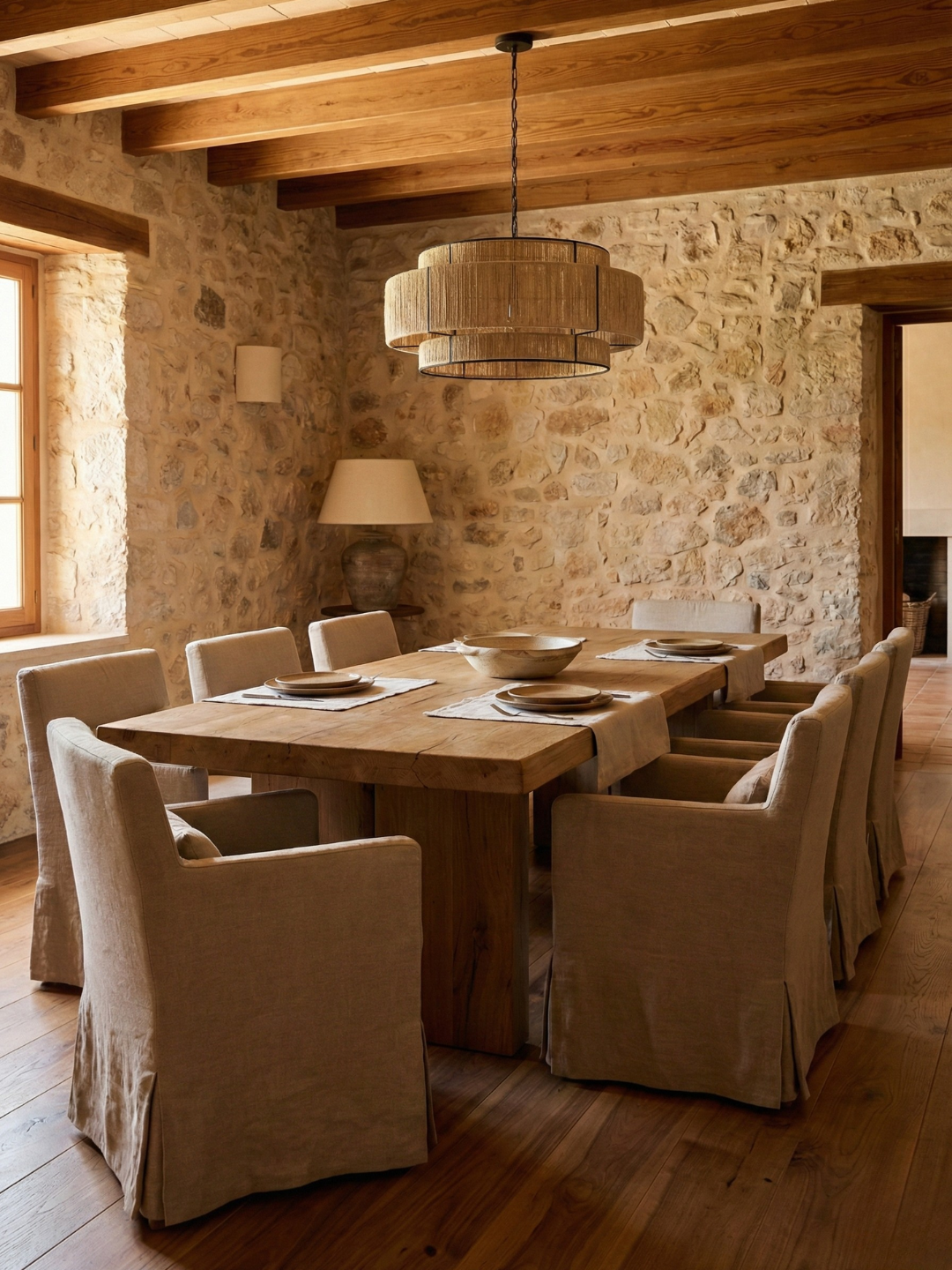
In my dining room, I have a table that seats eight. The room could technically fit a table that seats ten, but that would leave minimal clearance for chairs. I chose the smaller table to preserve flow. The chairs are scaled to the table, and the pendant light above is sized to the table's length, creating a cohesive proportion.
My entryway is narrow, so I avoided a console table that would have blocked the path. Instead, I have a tall, slim bookshelf that provides storage without extending into the walkway. The mirror above it is vertically oriented to emphasize the height of the space rather than its width.
What Good Scale and Proportion Create
When you get these elements right, a room feels effortless. You don't notice the furniture. You notice the space itself. There's a sense of flow and balance that makes the room comfortable to be in.
It also makes decorating easier. Once the foundational pieces are correctly scaled, everything else falls into place. You're not constantly rearranging or second-guessing because the bones of the room are sound.
I think of scale and proportion as the grammar of interior design. You can have beautiful words, but if the sentence structure is off, the meaning gets lost. Get the structure right, and the beauty becomes clear.